


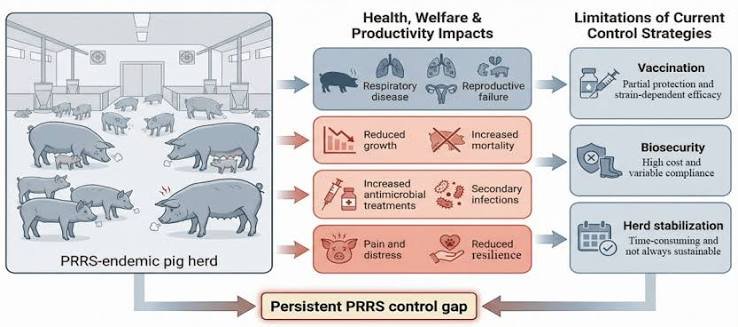
DES MOINES, Iowa — October 7, 2026 — As global swine integrators await final regulatory decisions on gene-edited livestock, swine health authorities and leading breeding organizations have officially released operational frameworks detailing how commercial producers must structure herd flows to implement Porcine Reproductive and Respiratory Syndrome (PRRS)-resistant pigs. PRRS costs the global swine industry over $600 million annually in mortality, reproductive failure, and production losses. The newly published strategies outline the precise genetic herd-replacement schedules, isolation-unit isolation protocols, and biosecurity flows necessary for swine integrators to adopt gene-edited lines upon official market clearance.
Structuring the Genetic Flow
The integration frameworks emphasize that implementing PRRS resistance requires more than replacing boars or introducing gene-edited gilts. Industry experts recommend a phased, multi-tiered genetic introgressing strategy:
-
Gilt Multiplication Networks: Establishing isolated multiplier herds to generate PRRS-resistant dams without disrupting commercial parity structure.
-
Semen Distribution Security: Implementing strict isolation for gene-edited terminal boars within AI studs to maintain biosecurity while scaling gene dissemination.
-
Biosecurity Quarantine: Managing transition flows in continuous-flow production systems during the multi-year shift from susceptible to resistant breeding stock.

