


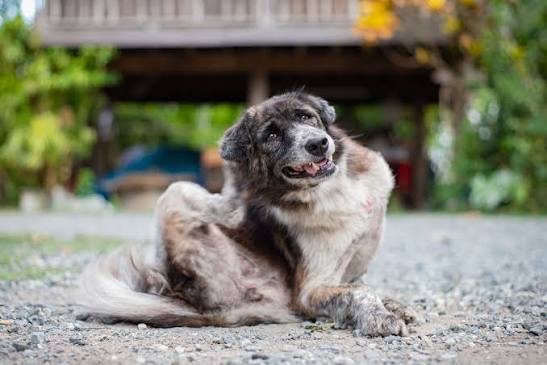
Janus Kinase (JAK) Inhibitors represent one of the most commercially lucrative and clinically transformative therapeutic classes in modern companion animal health. Used primarily in canine dermatology, these targeted small-molecule drugs disrupt the intracellular signaling pathways that trigger allergic itch (pruritus) and skin inflammation.
The veterinary dermatology sector generates billions annually, with oral JAK inhibitors acting as a primary pillar of treatment alongside monoclonal antibodies.
-
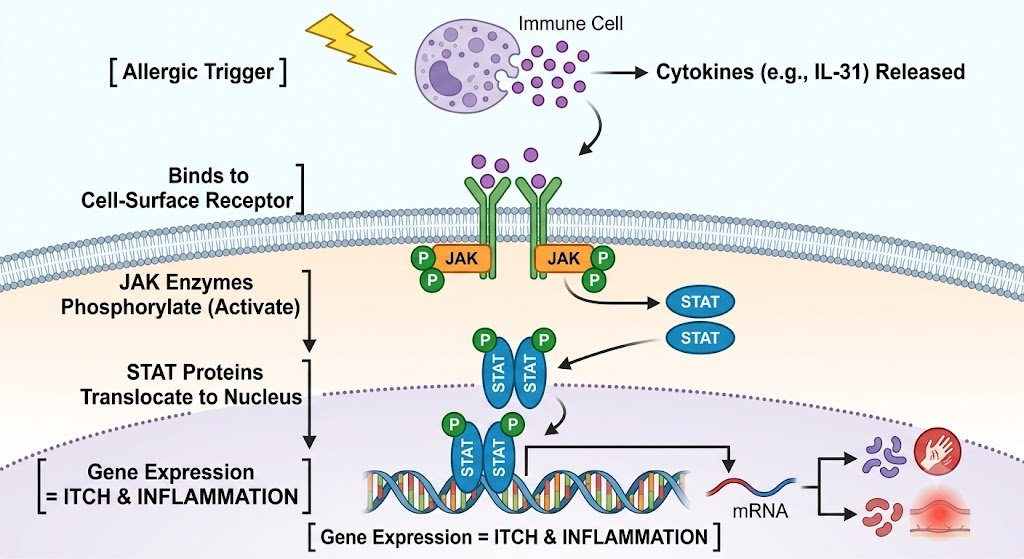
Receptor Activation: Cytokines bind to extracellular receptors on sensory nerves and immune cells.
-
JAK Phosphorylation: The receptor signals intracellular Janus Kinase (JAK) enzymes (JAK1, JAK2, JAK3, and TYK2).
-
The JAK-STAT Cascade: Active JAK enzymes phosphorylate STAT (Signal Transducer and Activator of Transcription) proteins. STAT dimers travel to the cell nucleus to trigger the itch and inflammatory response.
-
Targeted Inhibition: JAK inhibitors block the active enzymatic site of JAK proteins. By preventing phosphorylation, they break the cascade at the source—stopping the itch sensation within hours, long before a full immune response escalates.
2 Generations of Veterinary JAK Inhibitors
The veterinary market distinguishes between 1st-Generation (broad-spectrum/modestly selective) and 2nd-Generation (highly selective) JAK inhibitors:
1st Generation: Broad JAK Inhibitors
-
Inhibition Profile: Targets JAK1 (itch/inflammation), but also exhibits off-target activity against JAK2 (involved in red blood cell production/hematopoiesis) and JAK3/TYK2 (broader immune surveillance).
-
Clinical Consequence: Requires strict age minimums (12 months+) and, in some cases, loading doses or mandatory drug breaks around vaccines to avoid immunosuppression.
2nd Generation: Targeted Selective Inhibitors
-
Inhibition Profile: Engineered for >10x higher selectivity specifically for JAK1 over JAK2, JAK3, and TYK2.
-
Clinical Consequence: Minimizes off-target hematological and systemic immune interference. Allows for single daily dosing without a loading period, approved use in younger puppies (down to 6 months), and elimination of vaccine withdrawal warnings.
Deep Dive: The 3 Approved Commercial Drugs
Feature / Metric |
Apoquel Franchise (Zoetis) |
Zenrelia (Elanco) |
Numelvi (Merck / MSD) |
Active Molecule |
Oclacitinib maleate |
Ilunocitinib |
Atinvicitinib |
Drug Class |
1st Generation (Broad JAK) |
1st Generation (Broad JAK) |
2nd Generation (>10x JAK1 selective) |
Initial Approval |
May 2013 (FDA) |
September 2024 (FDA) |
July 2025 (EMA) / Feb 2026 (FDA) |
Formulations |
Film-coated tablet & Pork-liver chewable |
Unflavored tablet |
Unflavored tablet |
Dosing Protocol |
2x daily (BID) for 14 days, then 1x daily (SID) |
1x daily (SID) from Day 1 |
1x daily (SID) from Day 1 |
Onset of Action |
Within 4 hours |
Within 24 hours |
Within 2–4 hours |
Age Minimum |
12 months |
12 months |
6 months of age |
Vaccine Label Warning |
No strict pause required on label |
FDA Boxed Warning: Must pause 28+ days before/after live vaccines |
No vaccine pause required (Proven serological response) |
Safety Profile, Side Effects, and Contraindications
While JAK inhibitors offer near-immediate relief from intense itching, their immunomodulatory nature requires clinical oversight:
Common Mild Side Effects (1% – 10% of cases)
-
Transient gastrointestinal upset (vomiting, diarrhea, decreased appetite)
-
Mild lethargy during initiation
Systemic Risks & Precautions
-
Immunosuppression & Infections: Because JAK enzymes support host defense, broad JAK inhibition can predispose patients to opportunistic skin infections (demodicosis/mange, deep pyoderma, interdigital furunculosis) or exacerbate underlying systemic infections.
-
Neoplasia Risk: On-label warnings caution against using JAK inhibitors in dogs with a history of malignant neoplasia or severe recurrent infections.
-
Age Limits: Broad JAK inhibitors (Apoquel, Zenrelia) are restricted in puppies under 12 months due to risks of demodicosis and altered bone marrow development. Selective 2nd-gen inhibitors (Numelvi) are safety-tested down to 6 months.
Head-to-Head Comparison: The 3 Approved Commercial JAK Inhibitors
Feature / Metric |
Apoquel Franchise (Zoetis) |
Zenrelia (Elanco) |
Numelvi (Merck / MSD) |
Active Molecule |
Oclacitinib maleate |
Ilunocitinib |
Atinvicitinib |
Generational Tech |
1st Generation (Broad JAK family inhibitor) |
1st Generation (Targeted JAK inhibitor) |
2nd Generation (>10x JAK1 selective over JAK2/3/TYK2) |
Dosing Protocol |
2x daily (BID) for 14 days, then 1x daily (SID) |
1x daily (SID) from Day 1 |
1x daily (SID) from Day 1 (with food) |
Onset of Action |
Within 4 hours |
Within 24 hours |
Within 2–4 hours |
Age Minimum |
12 months |
12 months |
6 months of age |
Vaccine Label Warning |
No strict pause required |
FDA Warning: Requires 28-day pause prior to live vaccines |
No vaccine pause required (Proven serological response) |
Annual Sales & Financial Performance
-
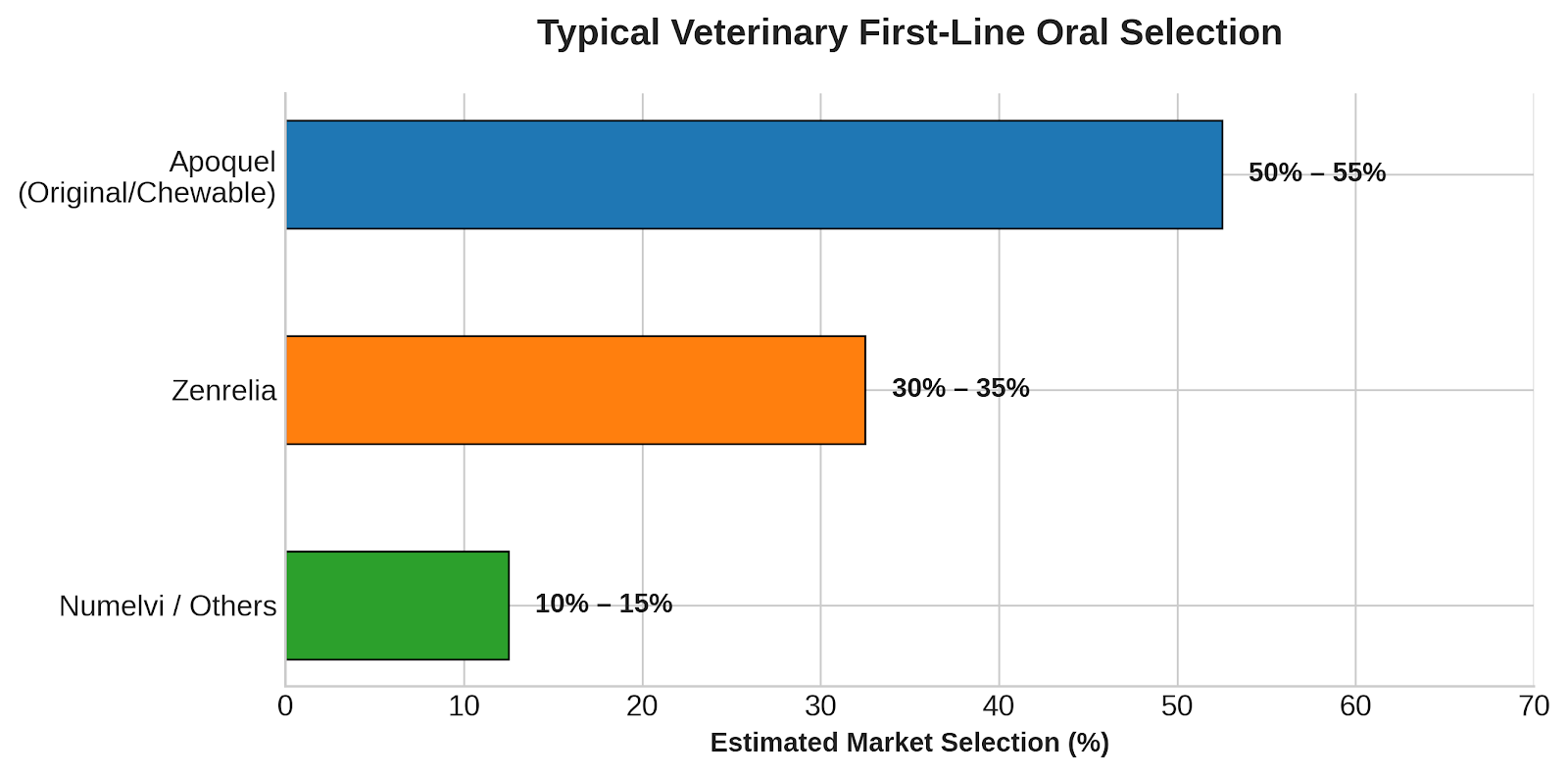
Apoquel Franchise (Zoetis) — ~$850M to $900M:
-
Zoetis’s overall dermatology portfolio (Apoquel + Cytopoint) generates ~$1.74 Billion
-
Apoquel (film-coated and chewable formulations combined) continues to account for the lion’s share of global oral JAK volume due to a decade-long first-mover advantage and entrenched clinic contracts
-
-
Zenrelia (Elanco) — ~$100M+ Run-Rate:
-
Rapidly captured market share by offering SID-from-Day-1 dosing and a ~20% price discount relative to Apoquel
-
Reached adoption in over 18,000 U.S. clinics, though growth faces minor friction from its FDA vaccine-pause labeling requirement
-
-
Numelvi (Merck / MSD) — Rapid Commercial Ramp:
-
Following approval, Numelvi has emerged as a challenger to both Zoetis and Elanco
-
By combining fast 2–4 hour onset, SID dosing from Day 1, approval down to 6 months of age, and no vaccine restrictions, Merck is heavily converting clinics concerned with the safety trade-offs of 1st-generation molecules
-
Veterinary Adoption & Prescribing Behaviors
-
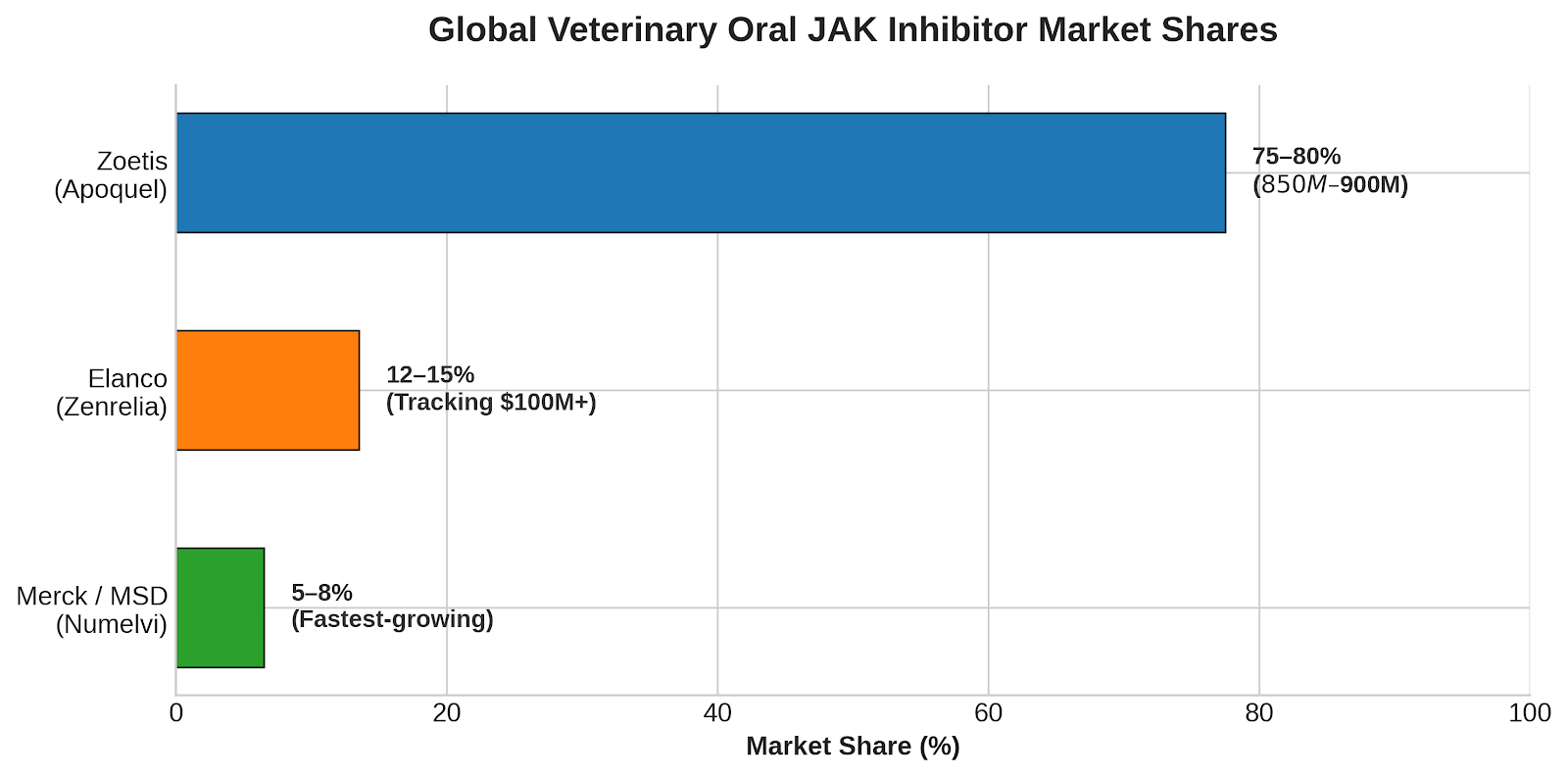
Why Vets Choose Apoquel:
-
Familiarity and extensive long-term safety data
-
Apoquel Chewable is heavily favored for high client compliance without needing pill pockets
-
-
Why Vets Choose Zenrelia:
-
Simplicity: Eliminates the confusing 14-day twice-daily loading phase for pet owners
-
Hypoallergenic: Unflavored formulation avoids protein allergens, making it safer for food-allergy elimination trials
-
Clinic Margin/Client Price: Lower cost-per-dose appeals to price-sensitive pet owners
-
-
Why Vets Choose Numelvi:
-
High JAK1 Selectivity: Clinics value the >10x selectivity for JAK1 over JAK2/3, theoretically minimizing off-target immune suppression or hematological side effects
-
Puppies & Boosters: It is the only oral JAK inhibitor approved for young dogs starting at 6 months that can be maintained continuously through standard annual vaccination protocols without interruption
-
Pet Owner Feedback & Practical Realities
-
Apoquel (Original vs. Chewable):
-
Positives: Tried-and-true rapid itch relief within hours. Chewables are accepted like treats by ~90% of dogs
-
Negatives: Owners frequently express frustration over the initial 14-day twice-daily dosing regimen and price increases over time
-
-
Zenrelia:
-
Positives: Highly praised for single daily dosing right from start-of-care and noticeable monthly cost savings
-
Negatives: Some owner confusion regarding the need to stop medication 28 days prior to annual booster shots, requiring temporary bridge therapies
-
-
Numelvi:
-
Positives: Strong owner satisfaction regarding speed of relief (same-day itch reduction) and no need to adjust schedules around vet vaccination appointments
-
Negatives: Must be administered at or around mealtime for maximum bioavailability, and tablets are unflavored compared to Apoquel Chewable
-

