


Multiple poultry outbreaks raise winter disease surveillance concerns
South Korea’s 2026/27 winter avian influenza season has recorded six highly pathogenic avian influenza outbreaks in commercial poultry farms since the first detection on 3 November.
The outbreaks have occurred across four regions, involving different types of commercial poultry operations. The Ministry of Agriculture, Food and Rural Affairs reported the six-outbreak total in its 13 November update.
Outbreak distribution
The official report lists the following geographical distribution:
| Region | Reported outbreaks |
|---|---|
| Gyeonggi | 3 |
| Chungcheongbuk-do | 1 |
| Jeonnam/Gwangju region | 1 |
| Incheon | 1 |
| Total | 6 |
The latest detections included:
-
H5N1 in a breeder duck operation in Jincheon
-
H5N9 in a large quail farm in Paju
-
H5N9 in a laying-hen operation in Ganghwa
These findings indicate that different poultry production systems are involved.
Wild birds and seasonal disease pressure
The winter migration of wild birds is an important consideration in South Korean avian influenza surveillance. Wild waterfowl can carry influenza viruses and contribute to environmental contamination around wetlands and poultry-producing areas.
The seasonal increase in wild-bird activity makes it particularly important to prevent contact between wild birds and commercial poultry.
Government response
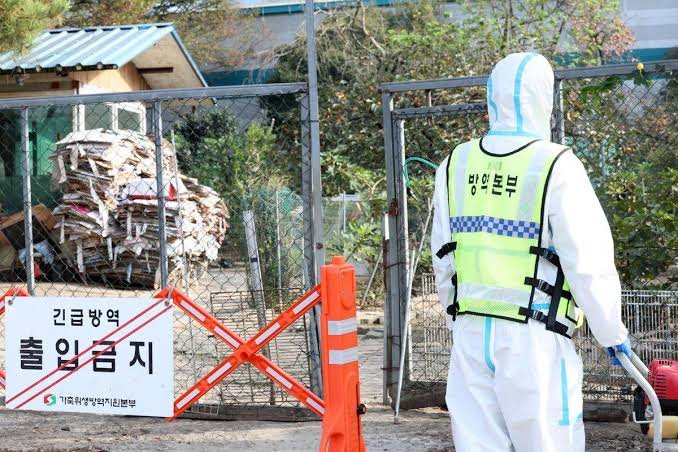
South Korea has intensified its disease-control response through:
-
Emergency farm inspections.
-
Movement standstill orders.
-
Culling of infected flocks.
-
Testing of surrounding farms.
-
Disinfection of farm entrances and transport routes.
-
Surveillance of wild-bird habitats.
-
Enhanced checks on integrated poultry companies.
Authorities have also directed additional inspections of farms associated with affected poultry companies.
Implications for poultry integrators
Multiple outbreaks across different production systems create a more complex disease-management environment.
Integrated poultry companies must ensure that breeding operations, hatcheries, broiler farms, layer farms and transport systems are not connected through inadequate biosecurity. The disease situation also reinforces the importance of maintaining reliable traceability records.
The six-outbreak situation is more than a collection of isolated farm incidents. It reflects a period of heightened seasonal infection pressure and highlights the importance of integrated disease surveillance across poultry species and production systems.

