


Following a multi-year market investigation into the £2 billion UK veterinary sector, the Competition and Markets Authority (CMA) has enacted the first legally binding package under the Veterinary Services Market Investigation Order 2026. The sweeping reforms target persistent pet care inflation, opaque pricing structures, and aggressive corporate consolidation that have squeezed UK household budgets over the past decade.
Market Landscape: Why the CMA Intervened
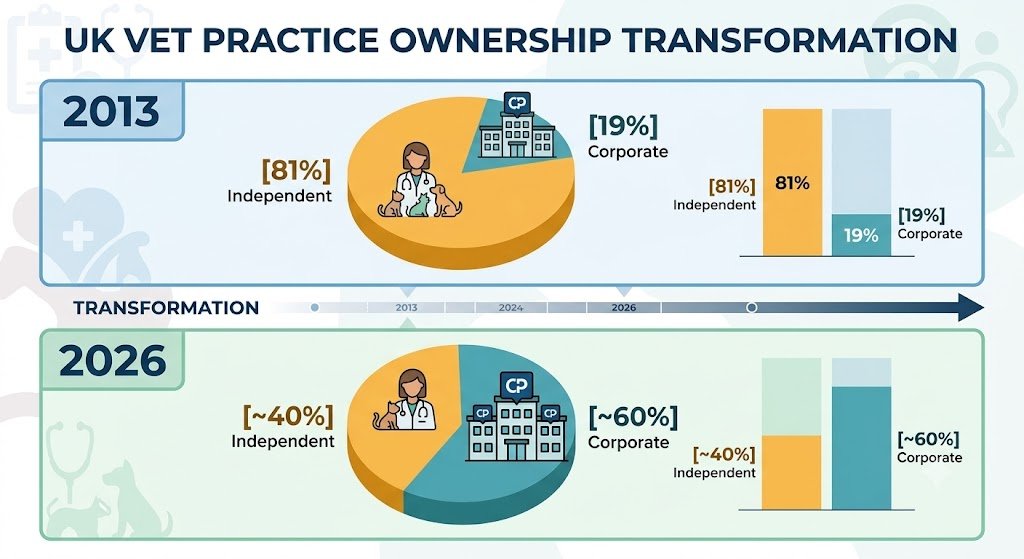
The CMA launched its formal investigation after identifying systemic failures in how veterinary services function as a consumer market. Corporate consolidation expanded rapidly over the past decade, transforming a sector once dominated by independent practices into one controlled predominantly by six large veterinary groups:
Key Data Insights Driving the Investigation
-
Price Premiums: Large corporate groups charged, on average, 18.3% more than independent practices for equivalent consultations, routine procedures, and prescription medicines.
-
Acquisition Inflation: Following the acquisition of an independent clinic by a corporate group, prices increased by an average of 9% within four years.
-
Information Failure: Prior to the reforms, over 40% of practices displayed no pricing online, and fewer than 50% of pet owners using corporate practices were aware their local clinic was part of a major chain.
-
Online Pharmacy Disconnect: Medications sold in-clinic carried markups of 50% to 60% higher than identical products sold by accredited online veterinary pharmacies.
Core Pillars of the First Tranche Reforms
The initial regulatory rollouts mandate binding operational changes for all veterinary clinics across England, Scotland, Wales, and Northern Ireland.
1. Mandatory Price Lists
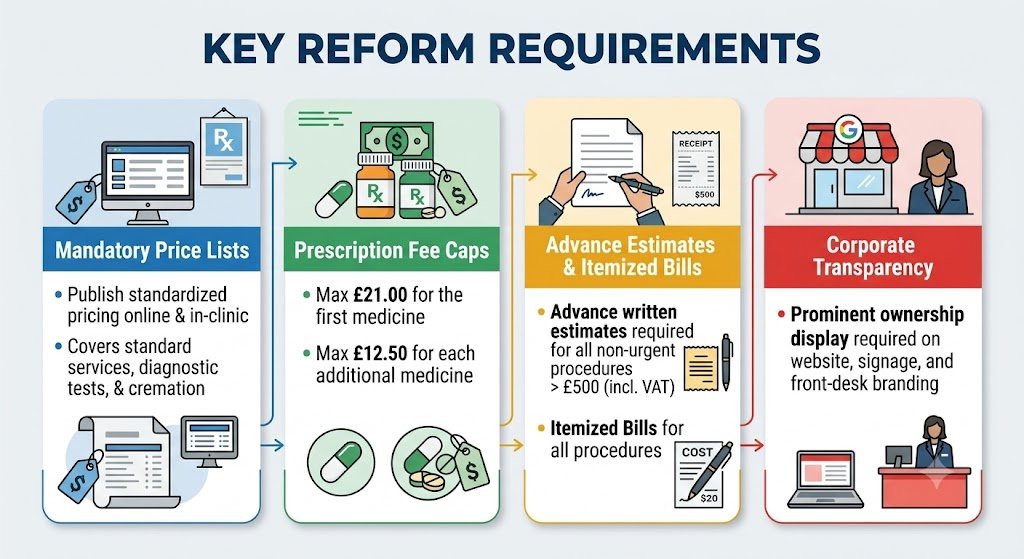
Practices must maintain clear, easily accessible pricing both in physical waiting rooms and on public websites. Mandatory listings cover:
-
Initial and out-of-hours consultation fees
-
Routine preventive care (vaccinations, microchipping, neutering)
-
Diagnostic imaging (X-rays, ultrasound scans) and standard blood panels
-
End-of-life care, euthanasia, and cremation options
2. Written Prescription Fee Caps
To eliminate artificial barriers preventing pet owners from buying cheaper medications online, written prescription fees are now capped:
-
First item fee: Maximum £21.00 (inclusive of VAT).
-
Additional items (same consult): Maximum £12.50 per item.
-
Note: Veterinary staff are now legally obligated to inform owners that prescriptions can be fulfilled through external online pharmacies.
3. Advance Written Estimates & Itemized Billing
For any course of treatment projected to cost £500 or more (including aftercare and VAT), clinics must provide a written quote prior to treatment, except in emergency cases where immediate intervention is required to save an animal’s life. All final invoices must be fully itemized.
4. Ownership Disclosures
To resolve consumer confusion, practice signage, branded collateral, and digital presence must explicitly disclose corporate group ownership.

Consumer Savings & Market Impact
The CMA estimates that full adoption of these structural transparency measures could save UK pet owners up to £200 million annually (part of an estimated £1 billion in total value over five years).
Category |
Pre-Reform Status |
Post-Reform Impact |
Estimated Pet Owner Benefit |
Prescription Sourcing |
In-clinic markups up to 60% |
Mandatory disclosure of external purchase options |
£200 – £300/year saved per chronic-care pet |
Price Comparison |
Under 40% listed prices online |
RCVS centralized “Find a Vet” database integration |
Ability to cross-shop routine services |
High-Cost Care |
Unexpected post-treatment bills |
Compulsory advance written quotes over £500 |
Reduction in unexpected medical debt |
Implementation Timeline
Final Report Published – March 2026
The CMA published its market investigation findings, outlining mandatory remedies to restore consumer price discovery and market competition.
Enactment of Legally Binding Orders – September 2026
The initial legal Order comes into full force, mandating immediate compliance with ownership disclosures, prescription caps, and initial price publishing.
Compliance Phase for Large Corporate Chains – Late 2026
Major corporate groups must complete full rollout of digital price tools, standardized staff communications, and billing software adjustments.
RCVS Central Comparison Launch & Independent Clinic Compliance – Early 2027
The Royal College of Veterinary Surgeons (RCVS) launches its centralized “Find a Vet” price comparison engine. Single-site independent practices complete their full compliance period.
Sector Response & Next Steps
Industry response has highlighted a shift toward improved communication. The British Veterinary Association (BVA) welcomed measures that build client trust, while reiterating calls for formal updates to the outdated Veterinary Surgeons Act 1966 to directly regulate practice ownership structures alongside individual professionals.
For practice owners, the focus shifts toward upgrading practice management software (PMS) to handle automated itemized estimates, updating web portals, and training front-desk staff to handle financial transparency conversations with confidence.

