
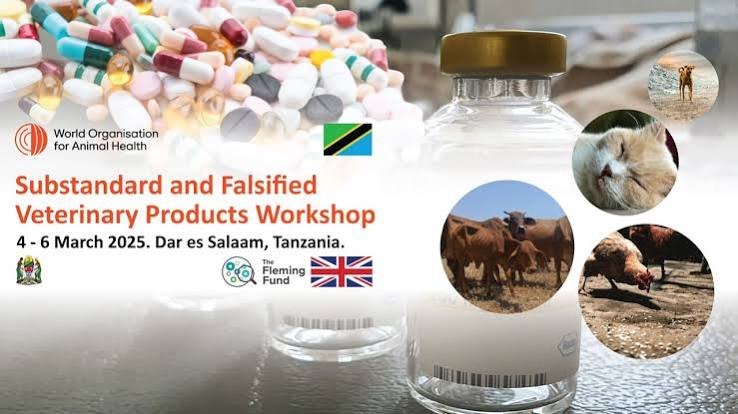
World Organisation for Animal Health (WOAH) is establishing a multidisciplinary expert group to revise international guidance covering substandard and falsified veterinary products (SFVPs).
The initiative, announced on 22 September 2026, will examine relevant sections of the WOAH Terrestrial Animal Health Code and Manual of Diagnostic Tests and Vaccines for Terrestrial Animals. Applications to join the expert group remain open until 23 October 2026.
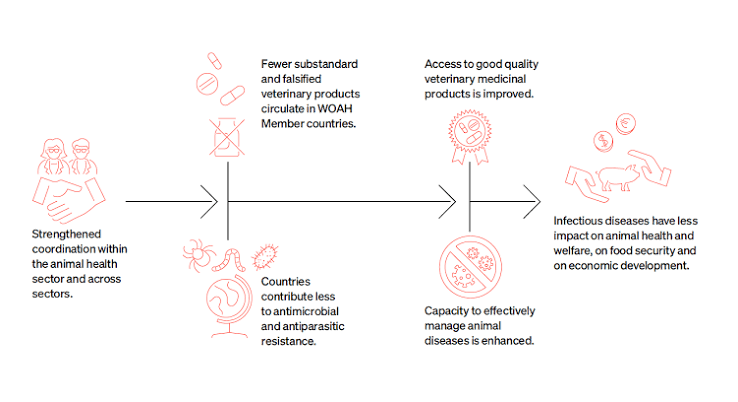
What WOAH wants to strengthen
The proposed work focuses particularly on:
-
Risk-based post-marketing surveillance
-
Quality monitoring of veterinary medicines
-
Vaccine quality control
-
Supply-chain inspection
-
Customs cooperation
-
Law-enforcement coordination
-
Detection of falsified veterinary products
-
Cross-border reporting
WOAH also intends to support a reporting mechanism for substandard and falsified veterinary products in the animal-health sector.
Why this matters
Substandard veterinary products can produce several layers of risk. A product may fail because it:
-
Contains insufficient active ingredient
-
Has deteriorated during storage
-
Does not meet manufacturing specifications
-
Is incorrectly labelled
-
Is counterfeit
-
Has been improperly transported
The consequences can include treatment failure, economic losses, animal suffering and potentially increased antimicrobial-resistance pressure. Vaccines are particularly sensitive because inadequate potency or improper storage can undermine population-level disease protection.
Global supply chains increase the challenge
Veterinary medicines increasingly cross multiple jurisdictions between:
Manufacturing → distribution → wholesaling → veterinary practice/farm → animal
Effective surveillance therefore cannot be confined to the manufacturing site. WOAH’s proposed approach brings together veterinary regulators, manufacturers, customs authorities, inspectors and law enforcement.
Strategic industry view
The initiative is important for legitimate veterinary-pharmaceutical manufacturers because stronger post-market surveillance can help differentiate compliant products from poor-quality or falsified alternatives.
It also potentially increases the value of:
-
Serialization
-
Digital product authentication
-
Cold-chain monitoring
-
Track-and-trace systems
-
Pharmacovigilance
-
Laboratory quality testing

