

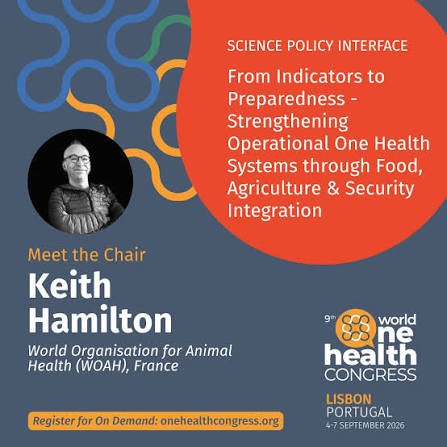
At the 9th World One Health Congress in Lisbon, Portugal, the World Organisation for Animal Health (WOAH) issued an urgent call to action to national governments, agricultural sectors, and public health agencies. Emphasizing that cross-sector cooperation is no longer optional, WOAH urged immediate, operational execution to counter two escalating systemic threats: multi-species viral spillover events—exemplified by Highly Pathogenic Avian Influenza (HPAI)—and the global silent pandemic of Antimicrobial Resistance (AMR).
Key Highlights from Lisbon
1. Stopping the Multi-Species Spillover Loop
The primary focal point of WOAH’s intervention in Lisbon was the dramatic evolution of high-consequence viral pathogens. HPAI (H5N1) has expanded beyond wild birds and commercial poultry into mammalian hosts, including dairy cattle, swine herds, and domestic carnivores. WOAH leaders emphasized that traditional sectoral silos—where animal health, human public health, and environmental agencies operate independently—are failing to contain multi-host pathogens.
-
Active Surveillance Expansion: WOAH advocated for real-time genomic surveillance at the farm gate, wildlife interfaces, and livestock assembly points.
-
Swine & Dairy Biosecurity Mandates: With swine acting as biological “mixing vessels” for influenza viruses, WOAH highlighted the urgency of upgrading biosecurity protocols across combined livestock sites to prevent novel re-assortment events.
2. Operationalizing the AMR Strategy
Highlighting Antimicrobial Resistance as a major systemic threat to food security and human medicine, WOAH called for immediate implementation of the Quadripartite (WOAH, WHO, FAO, UNEP) One Health Joint Plan of Action.
-
Phasing Out Routine Preventative Antimicrobials: WOAH urged member states to strictly limit medically important antimicrobials solely to therapeutic use under veterinary oversight, ending routine growth promotion and unbiosecure prophylactic use.
-
Integrated Environmental Tracking: Presenting alongside research partners like ICARS, WOAH underscored that AMR gene runoff from farming effluents into soil and waterways forms a loop that infects livestock and wild ecosystems.
Comprehensive Impact Analysis
Sector / Domain |
Primary Strategic Impact |
High-Priority Action Required |
Livestock & Agriculture (Dairy, Poultry, Swine) |
Higher biosecurity compliance overhead; trade restrictions on non-compliant exporters. |
Implement strict multi-species separation, closed-herd protocols, and automated thermal/symptom tracking. |
Veterinary Pharmaceuticals |
Shifting market demand from broad-spectrum antibiotics to targeted diagnostics and biosecurity vaccines. |
Accelerate R&D into livestock viral vaccines, alternatives to antibiotics (e.g., autogenous vaccines, phytogenics), and pen-side diagnostic kits. |
Public Health & Pandemic Preparedness |
Earlier threat detection reducing the risk of novel influenza strains achieving human-to-human transmission. |
Establish shared data pipelines between state veterinary labs and hospital emergency surveillance systems. |
International Trade & Regulations |
Harmonization of One Health compliance standards across global supply chains; stricter import screening. |
Adopt WOAH international standards to maintain export access and minimize trade suspensions during localized outbreaks. |

