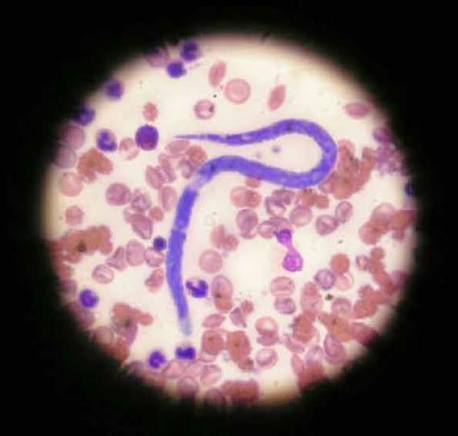


Zoetis has expanded the capabilities of its Vetscan Imagyst AI blood-smear application, adding detection of important blood parasites including microfilariae and Babesia spp. in dogs, as well as Cytauxzoon spp. in cats.
The update also expands cellular classification and enables AI analysis across the broader scanned blood-smear area rather than relying only on a conventional 200-cell differential.
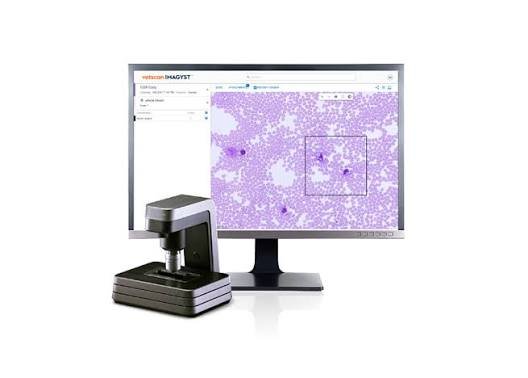
From AI blood smear to AI parasite detection
Vetscan Imagyst was initially developed to bring AI-assisted diagnostic analysis directly into veterinary practices.
Its blood-smear capability already supported:
-
Platelet estimation
-
Platelet-clump identification
-
White-cell differential assessment
-
Recognition of abnormal cellular morphology
-
Identification of regenerative red-cell changes
The latest update extends this capability toward blood-parasite detection.
The newly added profiles include:
-
Microfilariae in dogs
-
Babesia spp. in dogs
-
Cytauxzoon spp. in cats
This is particularly relevant because several of these organisms can produce clinically important disease and may require rapid differentiation from other causes of anaemia or systemic illness.
Why point-of-care detection matters
Veterinary diagnostics have traditionally involved a sequence of:
Sample collection → clinic processing → laboratory submission → specialist review → result → treatment decision.
AI-enabled point-of-care diagnostics attempt to compress this timeline. Zoetis says Vetscan Imagyst can deliver results in minutes and is supported by expert review through its virtual laboratory when required.
The company’s broader diagnostics ecosystem now combines AI-based imaging with automated CBC testing through Vetscan OptiCell, creating a more comprehensive in-clinic hematology workflow.
Clinical significance
The commercial value of the technology is not simply speed. The more important proposition is standardisation and accessibility of diagnostic interpretation.
A veterinary clinic may have access to automated blood counts but not always have an experienced clinical pathologist immediately available for smear interpretation.
AI can therefore act as a diagnostic-support layer, while the veterinarian remains responsible for clinical interpretation and decisions.