



India’s current seasonal H1N1 influenza activity is drawing renewed attention to the need for integrated One Health surveillance, particularly as highly pathogenic avian influenza A(H5N1) continues to circulate in poultry and wildlife. Recent evidence shows that India needs to monitor human influenza, poultry outbreaks and environmental exposure pathways together rather than treating them as separate surveillance problems.
The distinction is important: H1N1 circulating in humans is seasonal influenza, while H5N1 is primarily an avian influenza virus with zoonotic potential. ICMR has recently stated that the current H1N1 increase is consistent with seasonal influenza rather than a newly emerged H1N1 strain.
Kerala H5N1 outbreaks highlight the animal-health side
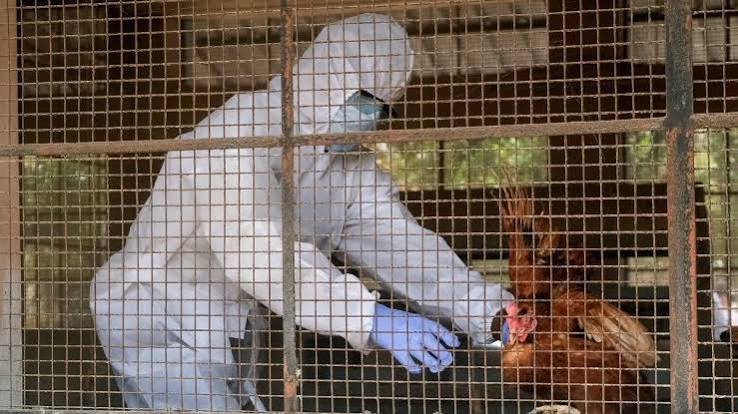
India reported 11 H5N1 outbreaks on poultry farms in Kerala, with the events detected from December 9 and confirmed by December 22. According to data reported to the World Organisation for Animal Health (WOAH), 54,100 birds died, predominantly ducks, while another 30,289 birds were culled as a precautionary measure.
That represents approximately 84,400 birds affected through mortality and precautionary culling.
The Kerala episode is particularly relevant because ducks and other domestic birds can provide an important interface between wild-bird influenza ecology and commercial or backyard poultry systems.
Human H5N1 surveillance: an important correction
The commonly cited statement that India has had “no confirmed human H5N1 cases in 2026” is no longer accurate.
The U.S. CDC’s June 26, 2026 global summary reported one human H5N1 infection in India during 2026, occurring in a child in March. Genetic analysis identified clade 2.3.2.1a, closely related to viruses previously reported in India and Bangladesh. Investigators noted two isolated poultry deaths in the child’s village, suggesting possible environmental exposure.
This makes accurate surveillance terminology particularly important: absence of a large human outbreak is not equivalent to absence of human infection.
India’s recent H5N1 human history
India recorded two fatal H5N1 infections in 2025, involving a child and an adult, according to the CDC. The country’s first officially reported human H5N1 infection occurred in Haryana in 2021, and the patient died in July that year.
Therefore, India’s recent history demonstrates a pattern of sporadic zoonotic spillover rather than sustained human-to-human transmission.
Why WHO’s One Health approach matters
WHO defines One Health as an integrated approach recognising the interdependence of human, animal, plant and ecosystem health. Avian influenza is specifically identified as one of the diseases for which integrated surveillance and control are important.
India already has institutional foundations for this approach. The National One Health Mission aims to develop integrated surveillance across the human-animal-environment interface, including genomic and metagenomic tools for detecting emerging pathogens.
WHO’s South-East Asia work also identifies avian influenza as a recurring example of pathogens emerging at the human-animal interface.
In July 2026, WHO reported that India had also transitioned to a new influenza surveillance interface within IDSP–IHIP, intended to improve dashboards, data visualisation and real-time surveillance and decision-making.
The surveillance architecture India needs
The strongest model would connect four data streams:
Poultry surveillance
↓
H5/H7 detection, mortality events, farm testing and genomic sequencing
Wild-bird & environmental surveillance
↓
Migratory birds, wetlands, poultry markets and environmental sampling
Human influenza surveillance
↓
ILI/SARI surveillance, exposure histories and influenza subtyping
Genomic surveillance
↓
Clade identification, reassortment monitoring and molecular epidemiology
Together, these systems can identify spillover earlier and distinguish seasonal human influenza from zoonotic avian influenza.
Key data
Indicator |
Latest evidence |
|---|---|
Kerala H5N1 poultry outbreaks |
11 |
Birds that died |
54,100 |
Additional birds culled |
30,289 |
Approx. total mortality + culling |
84,389 |
India’s H5N1 human cases reported in 2025 |
2 fatal |
India H5N1 human infection reported in 2026 |
1 case reported by CDC |
2026 case |
Child, March 2026 |
2026 viral clade |
2.3.2.1a |
Current H1N1 situation |
Seasonal influenza; no new strain identified |

