


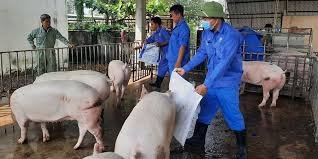
Authorities in Vietnam’s Quang Ninh Province have directed local administrations to complete the second round of livestock vaccination for 2026 by 15 December, while strengthening farm registration, disease surveillance and accountability for animal-health management.
Quang Ninh Province in northern Vietnam has ordered local authorities to complete the second round of livestock vaccination for 2026 before 15 December, as part of a broader programme to reinforce animal-disease prevention and control.
The directive places direct responsibility on the heads of communes, wards and special administrative zones for disease prevention and response within their jurisdictions.
The campaign is intended to improve vaccination coverage, address immunity gaps and strengthen preparedness against infectious diseases affecting livestock and aquaculture.
Supplementary vaccination to address immunity gaps
The second-round vaccination campaign is not restricted to animals that missed the first round. Authorities have directed localities to include:
-
Newly introduced animals.
-
Animals that have not previously been vaccinated.
-
Animals whose vaccine-induced immunity is approaching expiry.
-
Animals requiring supplementary or booster doses under the applicable vaccination programme.
The approach is intended to reduce gaps in population immunity and improve the consistency of disease prevention across commercial and smallholder production systems. The 15 December deadline provides local administrations with a defined implementation target before the end of the year.
Farm registration and identification become central to disease control
An important component of the directive is the requirement for livestock farms to declare their operations and receive farm identification codes. Farm registration and coding can help authorities build a more accurate picture of livestock locations, animal populations and disease risks.
Such systems are particularly important when an outbreak requires rapid tracing of animals, movements, contacts and potentially exposed farms. The province is also directing authorities to strengthen surveillance in:
-
Locations with previous disease outbreaks.
-
Areas considered epidemiologically high-risk.
-
Farms and production clusters with significant livestock populations.
-
Areas designated as disease-free zones that require continued monitoring.
Suspected outbreaks and unusual animal deaths must be reported immediately so that veterinary authorities can undertake investigation, sampling, zoning and movement-control measures.
Greater accountability for local disease prevention
The directive makes local administrative leaders directly accountable for animal-health management. Authorities have warned against concealing disease outbreaks, selling or slaughtering sick animals and disposing of carcasses improperly.
Violations may attract inspection and penalties under applicable regulations. The measures reflect the importance of early reporting in controlling infectious diseases. Delayed reporting can allow infected animals to move through markets, collection centres and transport networks before veterinary authorities establish control zones.
Integrated veterinary surveillance through VAHIS
The Department of Agriculture and Environment is expected to coordinate surveillance, testing and disease reporting through Vietnam’s VAHIS animal disease information system. The system provides an important administrative and epidemiological framework for collecting and communicating disease information.
The directive also calls for coordination across multiple government agencies:
-
Agriculture and Environment: Veterinary surveillance, testing and disease-control implementation.
-
Police and border guards: Enforcement against illegal animal movements and smuggling.
-
Customs: Monitoring animal and animal-product movements at border crossings.
-
Trade authorities: Oversight of collection points, markets and commercial movement.
-
Health authorities: Coordination on zoonotic diseases, particularly rabies and avian influenza.
The involvement of human-health authorities is significant because livestock and companion-animal disease control increasingly requires a One Health approach.
Biosecurity requirements for livestock and aquaculture farms
Farmers are expected to receive guidance on strengthening biosecurity across several critical areas. These include:
-
Health status and sourcing of breeding animals.
-
Feed quality, storage and sourcing.
-
Water hygiene.
-
Entry of people and vehicles.
-
Cleaning and disinfection.
-
Isolation and reporting of sick animals.
-
Safe handling and disposal of carcasses.
These measures are particularly important in intensive livestock systems, where high animal density and frequent movement can accelerate the spread of infectious diseases. The directive also places emphasis on preventing illegal trade and movement of animals, which can undermine vaccination and disease-surveillance programmes.
2027 disease-prevention plans: important administrative deadlines
The provincial government has also set deadlines for the preparation of disease-prevention plans for 2027.
Administrative level |
Submission deadline |
|---|---|
Departmental and provincial plans covering terrestrial livestock and aquaculture |
20 November 2026 |
Commune-level plans |
10 December 2026 |
Completion of second-round 2026 livestock vaccination |
15 December 2026 |
The planning requirements are intended to ensure that disease-prevention programmes for 2027 are prepared and approved before the new year.
Implications for the animal-health industry
The directive creates opportunities across the veterinary vaccine, diagnostics, farm biosecurity and digital animal-health sectors.
Veterinary vaccines: The supplementary vaccination requirement may support demand for disease-specific and booster vaccines, depending on the local disease-control schedule and eligible animal populations.
Diagnostics: Stronger surveillance and immediate reporting of suspected cases increase the importance of laboratory testing, sample collection and rapid diagnostic systems.
Farm identification and traceability: Digital farm-registration platforms, animal identification systems and disease-reporting software could become increasingly important.
Biosecurity products: Disinfectants, protective equipment, vehicle sanitation and farm-entry systems are relevant to the programme’s implementation.
Distribution networks: Local vaccine storage, cold-chain systems and veterinary delivery capacity will be critical to meeting the December deadline.
From vaccination campaigns to integrated disease management
The Quang Ninh initiative illustrates a broader shift from vaccination as a standalone activity towards integrated disease prevention. Vaccination coverage, farm identification, movement control, surveillance, laboratory confirmation and biosecurity need to function as connected components of an effective animal-health system.
The programme’s success will depend on implementation at the commune and farm levels, accurate reporting and adequate availability of vaccines and veterinary personnel.
For the animal-health industry, the development is important because it demonstrates how government-led disease-control programmes can create demand across the entire veterinary ecosystem—not just for vaccines, but also for diagnostics, biosecurity, traceability and digital surveillance.

