


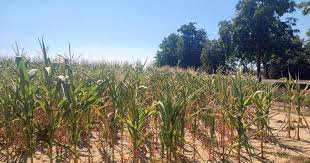
Persistent summer heatwaves and severe soil moisture deficits across Western, Central, and Southern Europe have triggered substantial downgrades to 2026 summer crop yields and severely degraded livestock fodder reserves, according to the European Commission’s Joint Research Centre (JRC).
In its August 2026 MARS (Monitoring Agricultural Resources) Bulletin, the EU’s scientific service warned that key summer crops—including grain maize, fodder maize, soybeans, and sunflowers—are projected to yield well below their five-year averages, with reductions reaching up to 14% for the hardest-hit commodities.
1. Crop Impact Matrix: Degradation of Summer Harvests
The combination of prolonged atmospheric heat stress, poor fertilization, and limited availability of irrigation water has accelerated premature crop senescence and impaired grain filling across primary agricultural zones.
Crop Category |
Expected Yield Reduction (vs 5-Yr Avg) |
Primary Biomass & Biological Failure Points |
Affected EU Markets |
Grain Maize |
-10% to -14% |
Impaired pollination, accelerated leaf drying, heat-induced sterile tassels |
France, Germany, Hungary, Northern Italy |
Soybeans |
Highest relative yield cut |
Poor pod formation, stunted vegetative expansion |
Central & Southern EU demand hubs |
Sunflowers |
Moderate to Severe local cuts |
Reduced seed size, lowered oil conversion efficiency |
Western & Central Europe (Offset by Black Sea/RO/BG) |
Silage & Fodder Maize |
Severe biomass loss |
Reduced total tonnage per hectare, premature harvest requirements |
Broad EU Livestock Sector |
While winter cereal yields remained stable near five-year historic averages across Northern Europe, the central-western crop shock has created a sharp two-speed agricultural landscape across the bloc.
2. Livestock Sector & Fodder Crisis
Grassland productivity and natural pasture availability have dropped significantly across Central and Southern Europe. Thermal stress combined with deteriorating grazing quality has placed operational strain on dairy, beef, and small ruminant farming operations.
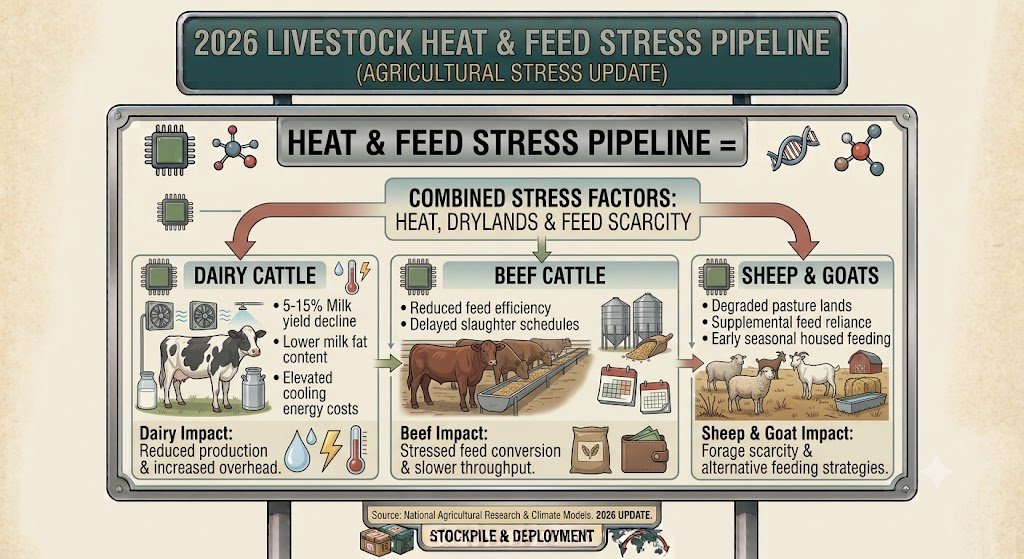
Dairy Operations – Dairy herds exposed to prolonged ambient temperatures exceeding 30 C have demonstrated noticeable physiological stress. Milk yield declines range between 5% and 15% across impacted regions in France, Italy, Greece, and Southern Germany, alongside reductions in milk fat and protein composition.
Beef & Ruminant Production – For beef cattle, extreme heat has lowered feed conversion efficiency and slowed daily weight gains. Grazing lands for sheep and goats across Mediterranean regions have experienced thermal burnout, forcing livestock managers to draw down on winter hay reserves months ahead of schedule.
3. Geographical Distribution of Climate Impact
Persistent thermal stress and irrigation curtails have created specific demand deficit centers and supply corridors across the continent.
-
Severe Zone (High Loss / Risk of Crop Failure): France, Southern Germany, Northern/Central Italy, Austria, Czechia, Slovakia, Hungary, and Western Romania.
-
Moderate Impact Zone (Yield Reductions): Benelux nations, Slovenia, Croatia, and Southern Poland.
-
Resilient/Surplus Zone: Northern Europe, Eastern Bulgaria, and Romania (retaining standard output for key oilseeds).
4. Market Consequences & Farm Economics
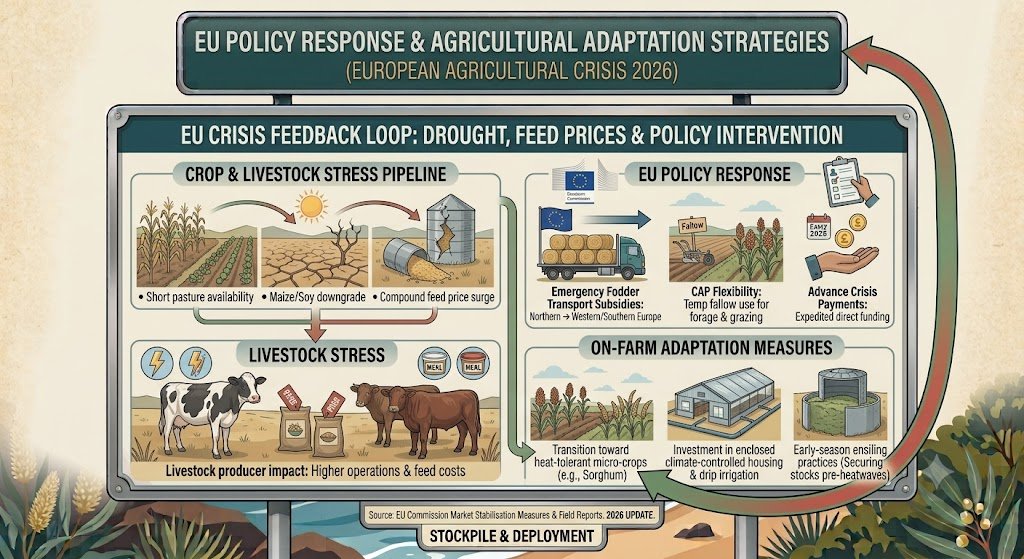
The convergence of short pasture availability and downgraded maize/soy production has increased regional compound feed prices. Livestock producers face escalating operational expenses due to higher hay prices, increased energy expenditure for farm cooling systems, and imported protein meal basis premiums.
5. EU Policy Response & Agricultural Adaptation Strategies
EU Agriculture Commissioner Christophe Hansen stated that the Commission is actively tracking field developments to evaluate market stabilization measures.
Policy Interventions Under Review
-
Emergency Fodder Transport Subsidies: Direct transport relief to relocate fodder surpluses from Northern and Eastern regions to deficit zones in Western and Southern Europe.
-
Common Agricultural Policy (CAP) Flexibility: Temporary derogations allowing farmers to use fallow land for forage production and grazing without forfeiting eco-scheme payments.
-
Advance Crisis Payments: Expedited disbursement of CAP direct payments ahead of the standard autumn funding cycle to alleviate farm liquidity constraints.
On-Farm Adaptation Measures
-
Cropping Pattern Shifts: Accelerated transition toward heat-tolerant micro-crops, sorghum, and drought-resistant millet varieties.
-
Infrastructure Upgrades: Investment in enclosed climate-controlled livestock housing and high-efficiency micro-drip irrigation systems.
-
Forage Management: Increase in early-season ensiling practices to secure forage stocks prior to mid-summer heatwaves.

 warns that persistent heatwaves and severe water deficits have slashed EU summer crop yields)