


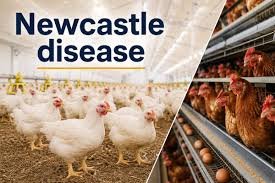
Russia has tightened veterinary import controls on poultry and related products originating from four Spanish provinces as Newcastle disease continues to affect poultry production in Castilla y León. The move highlights how a geographically concentrated animal-disease event can quickly become a cross-border trade and supply-chain issue.
Russia’s response targets a broad poultry supply chain
The reported Russian restrictions cover a wide range of poultry-related commodities originating from Segovia, Ávila, Salamanca and Valladolid, including:
| Product category | Reported Russian position |
|---|---|
| Live poultry | Restricted |
| Hatching eggs | Restricted |
| Poultry meat | Restricted |
| Selected processed poultry products | Restricted |
| Certain feed products | Restricted |
| Poultry-related equipment | Restricted |
| Properly heat-treated products | Exempt where treatment meets disease-control requirements |
The breadth of the measure is commercially significant because Newcastle disease controls can extend well beyond live birds. International animal-health frameworks recognise the potential for infected material, contaminated equipment, feed and other fomites to contribute to disease transmission.
The European Commission identifies feed, water, equipment, vehicles, people and other contaminated materials as potential indirect transmission routes for Newcastle disease.
Why these four Spanish provinces matter
The affected provinces are all in or associated with Castilla y León, one of Spain’s important agricultural regions.
Spain’s official Ministry of Agriculture, Fisheries and Food (MAPA) has recorded Newcastle-disease-related measures during 2026 in:
-
Valladolid — June 16
-
Segovia — June 23
-
Ávila — July 2
-
Salamanca — July 22
These entries relate to the suspension of insurance coverage for Newcastle disease in the respective provinces and provide independent evidence that the disease situation was sufficiently significant to trigger official risk-management measures.
The European Commission has also maintained a dedicated Newcastle disease surveillance and control framework for Spain, with the disease discussed through its PAFF Animal Health and Welfare Committee during 2026.
Newcastle disease is a major poultry trade risk
Newcastle disease is caused by virulent strains of avian paramyxovirus type 1 and can affect chickens, turkeys and numerous other bird species. WOAH classifies virulent Newcastle disease as a listed disease requiring notification. Clinical disease can include respiratory, neurological and digestive signs and can resemble highly pathogenic avian influenza, making laboratory confirmation important.
The economic importance extends beyond mortality. A significant outbreak can produce:
Disease detection → movement controls → farm restrictions → culling/production losses → reduced supply → certification constraints → export restrictions → price and trade effects
That chain explains why animal-health authorities and trading partners can respond to apparently localised outbreaks with geographically targeted import controls.
Regionalisation is becoming central to animal-health trade
One of the most important developments in modern animal-health regulation is the move away from treating an entire country as uniformly affected.
The EU’s own poultry trade framework explicitly allows regionalisation, meaning that disease status can be assessed geographically and only affected countries, zones or territories can face restrictions. The framework includes specific conditions for Newcastle disease and requires veterinary certification and defined health guarantees.
Why heat treatment matters
The reported exemption for appropriately heat-treated poultry products reflects an important principle in animal-health trade: processing can reduce or eliminate the infectious-disease risk associated with a commodity.
The exact treatment requirements depend on the importing country’s veterinary rules and the relevant disease-control standard. Therefore, exporters cannot assume that any generic cooking or processing operation automatically qualifies for exemption.
The broader international framework recognises differentiated sanitary measures according to the risk posed by a particular product and its processing.
The Spanish outbreak picture
Newcastle disease has not been an isolated Spanish event in 2026.
European Commission material documents Newcastle disease activity in Spain during the year, while independent reporting based on Spanish agricultural authorities described further outbreaks in Castilla y León, including Valladolid, Segovia and Salamanca. One July report cited three additional outbreaks affecting 114,917 birds in Íscar, Navas de Oro and Paradinas de San Juan.
The epidemiological picture is therefore important: the Russian restriction should not be viewed simply as a response to one isolated farm. It forms part of a broader disease-control environment in which authorities are monitoring multiple outbreaks and attempting to prevent further transmission.
What this means for Spanish poultry exporters
For exporters, the immediate commercial issue is market segmentation. A farm or processing facility located inside a restricted province may face substantially different export conditions from an otherwise comparable operation located outside the affected zone.
That creates a premium on:
-
disease-free geographic zones;
-
traceability;
-
veterinary certification;
-
compartmentalisation;
-
validated heat-treatment processes;
-
documented biosecurity;
-
rapid laboratory diagnostics;
-
auditable movement records.
In practical terms, animal-health status is becoming part of the commercial specification of poultry products.
What it means for Russia
Russia’s response also illustrates the challenge facing major poultry-importing markets. A broad restriction can protect domestic poultry populations but potentially reduces the pool of available suppliers. The longer restrictions remain in place, the greater the possibility of:
-
supplier substitution;
-
trade diversion;
-
higher procurement costs;
-
longer logistics routes;
-
increased dependence on alternative origins.

