


Global Poultry Industry Set for Another Strong Year, But New Challenges Are Emerging – July 2026 | Global Poultry Intelligence | AnimalHealthIndia.com
Outlook 2026
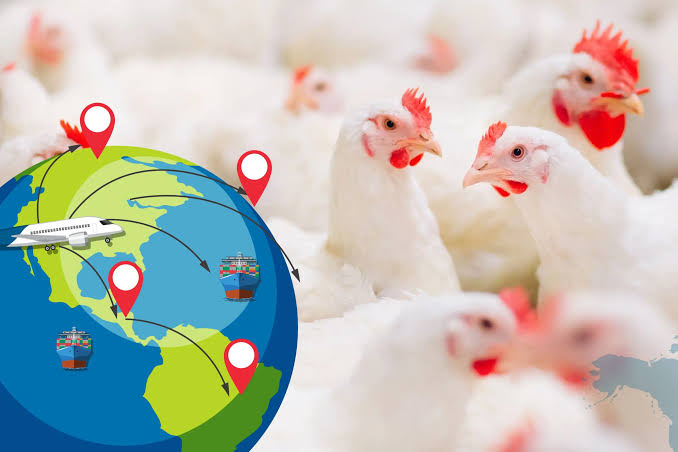
The global poultry industry continues to outperform most other animal protein sectors, with production, trade and consumer demand remaining strong despite geopolitical tensions and economic uncertainty.
According to the latest RaboResearch Global Poultry Quarterly Report, worldwide poultry production is now expected to grow by 3.0% to 3.5% in 2026, an upward revision from the bank’s earlier forecast of 2.5% to 3.0%. The stronger outlook reflects robust expansion across several major poultry-producing countries, continued consumer preference for chicken as an affordable source of protein, and resilient international trade.
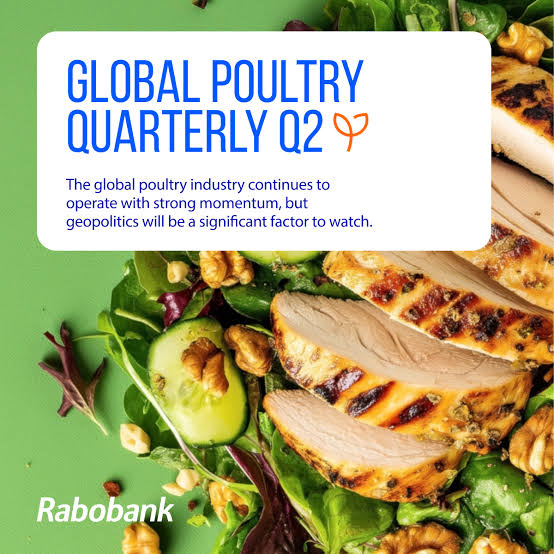
However, the report also warns that the industry is entering a more volatile phase. Slower economic growth, changing trade policies, climate-related risks and tight breeding stock supplies are likely to test producers over the coming months.
Global Poultry Production Accelerates
The poultry sector has started 2026 on a strong note. During the first quarter of 2026, poultry production expanded by more than 5% year-on-year in several major producing countries, significantly outperforming expectations. The strongest growth has been reported from:
China
European Union
Brazil
South Africa
Philippines
These markets continue to invest in expanding production capacity while benefiting from improving disease control, efficient genetics and relatively stable feed supplies. As a result, RaboResearch has increased its global production forecast for the second time this year.
Chicken Continues to Win Consumers
One of the biggest reasons behind poultry’s strong performance is affordability. Compared with beef and several other animal proteins, chicken continues to offer consumers better value for money.
Even as food inflation affects household budgets worldwide, chicken remains one of the most economical sources of high-quality protein. This price advantage has encouraged many consumers to switch from more expensive meats.
In many countries, chicken consumption continues to grow because it is:
More affordable
Widely available
Quick to cook
Accepted across different cultures and religions
Perceived as a healthier protein option
These factors continue to support long-term demand.
Economic Slowdown Could Affect Consumer Spending
Despite the positive outlook, economists warn that weaker global economic growth may begin affecting poultry demand. Consumers in lower-income countries, particularly across South Asia and parts of Africa, are becoming increasingly sensitive to food prices.
Although chicken remains cheaper than many alternative proteins, prolonged inflation and reduced household purchasing power could slow demand growth in these regions. Producers may therefore face greater pressure to maintain competitive pricing while controlling production costs.
Food Security Is Reshaping Global Poultry Markets
One of the most important structural changes identified in the report is the growing emphasis on domestic poultry production. Following recent disruptions caused by the COVID-19 pandemic, geopolitical conflicts and supply chain challenges, many governments are seeking to reduce dependence on imported food.
Countries across:
Africa
Middle East
Southeast Asia
are increasingly investing in local poultry production as part of broader food security strategies.
This “local-to-local” approach encourages countries to produce more chicken domestically rather than relying heavily on imports. The trend is expected to reshape global poultry trade over the coming decade.
China Has Become a Global Game Changer
Perhaps the most significant development highlighted in the report is China’s remarkable transformation. For many years, China was the world’s largest importer of chicken meat.
Today, the country has become a significant net exporter, marking one of the biggest structural shifts in the global poultry market. This transformation has been driven by:
Expansion of domestic production
Improved breeding programmes
Modern processing facilities
Better disease control
Investments in poultry genetics
China’s emergence as an exporter is changing international trade patterns and increasing competition in export markets.
Global Poultry Trade Remains Surprisingly Strong
Despite geopolitical tensions and ongoing regional conflicts, international poultry trade continues to expand. Global poultry exports increased by approximately 3.5% during the first quarter of 2026 compared with the same period last year.
This growth is particularly noteworthy given continuing geopolitical uncertainty, including disruptions associated with the conflict involving Iran. Trade has remained resilient because major exporters and regional logistics hubs have continued to facilitate poultry shipments. Key exporting and trading countries include:
Brazil
Ukraine
Türkiye
Saudi Arabia
Oman
Iraq
These countries continue to play an important role in maintaining global poultry supply.
Strait of Hormuz Reopening Reduces Market Uncertainty
The report notes that the interim agreement between the United States and Iran, which extends the ceasefire and supports the reopening of commercial shipping through the Strait of Hormuz, has reduced immediate concerns about energy prices and freight costs. The Strait of Hormuz is one of the world’s most important maritime trade routes. Its reopening could improve the movement of:
Poultry products
Feed ingredients
Agricultural commodities
Lower shipping risks may also help stabilise international poultry prices during the second half of 2026.
Brazil-EU Trade Could Become the Biggest Story of 2026
One of the most closely watched developments involves the possibility of restrictions on Brazilian poultry entering the European Union. Brazil is the world’s largest poultry exporter and supplies significant volumes to European markets.
If Brazilian poultry exports to the EU are reduced or restricted, analysts believe several market changes could occur:
In Europe
Chicken prices may increase.
Supply could tighten.
Imports from alternative suppliers may rise.
In Brazil
Domestic poultry prices could weaken.
Exporters may seek new international markets.
Competition in Asia, the Middle East and Africa could intensify.
Countries such as Thailand and China could benefit by increasing exports to Europe if demand shifts away from Brazil.
Breeding Stock Remains Tight
The poultry industry continues to face limited availability of breeding stock. Breeding birds form the foundation of global poultry production, and any constraints at this level can affect production for many months. Limited breeding stock may:
Slow expansion plans.
Increase chick prices.
Restrict production growth.
Increase market volatility.
Maintaining healthy breeding flocks therefore remains a strategic priority for poultry companies worldwide.
Climate and Geopolitics Continue to Create Uncertainty
The report identifies several major risks that producers should continue monitoring. These include: Climate Risks. Possible El Niño conditions could affect:
Maize production
Soybean production
Feed prices
Poultry production costs
Geopolitical Risks
International conflicts may influence:
Shipping routes
Freight costs
Energy prices
Export markets
Disease Risks
Continued vigilance against avian influenza remains essential. Disease outbreaks can quickly disrupt production and international trade.
Operational Excellence Will Separate Market Leaders
As markets become more competitive, poultry companies are being encouraged to focus on efficiency rather than simply expanding production. Industry analysts recommend greater attention to:
Feed conversion efficiency
Disease prevention
Biosecurity
Automation
Precision nutrition
Cost management
Supply chain resilience
Companies able to produce efficiently while maintaining strong biosecurity are expected to be better positioned during periods of market volatility.
Balanced Production Growth Will Be Critical
Although demand remains healthy, analysts caution against uncontrolled expansion. Rapid increases in production could create oversupply, putting pressure on prices and reducing profitability.
Maintaining a balance between production and demand will therefore remain one of the industry’s biggest priorities during the remainder of 2026. Disciplined supply management will be particularly important if economic growth slows further.
Industry Outlook
The global poultry industry remains one of the strongest-performing sectors within animal agriculture. Growing consumer demand, favourable pricing, expanding international trade and continued investments in production technology are expected to support further growth throughout 2026.
At the same time, producers must prepare for increasing uncertainty arising from trade policy changes, geopolitical developments, climate risks and evolving consumer behaviour. The companies that invest in efficiency, disease prevention and flexible supply chains are likely to be the best positioned for long-term success.
Key Statistics
Indicator 2026 Outlook
Global poultry production growth 3.0–3.5%
Previous forecast 2.5–3.0%
Q1 global poultry trade growth 3.5% YoY
Production growth in several major markets Above 5% YoY
Key growth markets: China, EU, Brazil, South Africa, Philippines
Major risks: Geopolitics, El Niño, breeding stock shortages, trade restrictions
Key Takeaways
-
Global poultry production is now forecast to grow by 3.0–3.5% in 2026, higher than earlier estimates
-
Strong production growth is being driven by China, Brazil, the European Union, South Africa and the Philippines
-
Chicken continues to gain market share because it remains more affordable than many other animal proteins
-
Governments are increasingly investing in local poultry production to improve food security and reduce reliance on imports
-
China has transitioned from being the world’s largest chicken importer to a significant net exporter, reshaping global trade
-
International poultry trade grew 3.5% year-on-year in the first quarter of 2026, despite geopolitical tensions
-
Potential EU restrictions on Brazilian poultry imports could significantly alter global trade flows
-
Climate risks, geopolitical uncertainty and breeding stock shortages remain key challenges for the industry
Why This Matters for the Global Animal Health Industry
The poultry sector is entering a new phase where growth will increasingly depend on resilience rather than expansion alone.
While demand for chicken continues to rise, future success will be shaped by stronger biosecurity, advanced genetics, disease surveillance, sustainable feed strategies and efficient production systems.
For animal health companies, poultry integrators, vaccine manufacturers and feed businesses, the evolving market presents significant opportunities—but also demands greater investment in innovation and risk management. As countries pursue food security through local production and global trade patterns continue to shift, maintaining healthy flocks and resilient supply chains will become more important than ever.

