



India’s animal healthcare sector is undergoing a major structural transformation. Specialized, animal-specific diagnostic infrastructure is replacing legacy human-adapted pathology workflows. Driven by double-digit pet ownership growth in urban centers and government-mandated livestock disease surveillance, the Indian veterinary diagnostics market is scaling toward $200M+ within the broader $2.3B domestic animal health market.
Market Dynamics: Human Diagnostics vs. Dedicated Veterinary Platforms
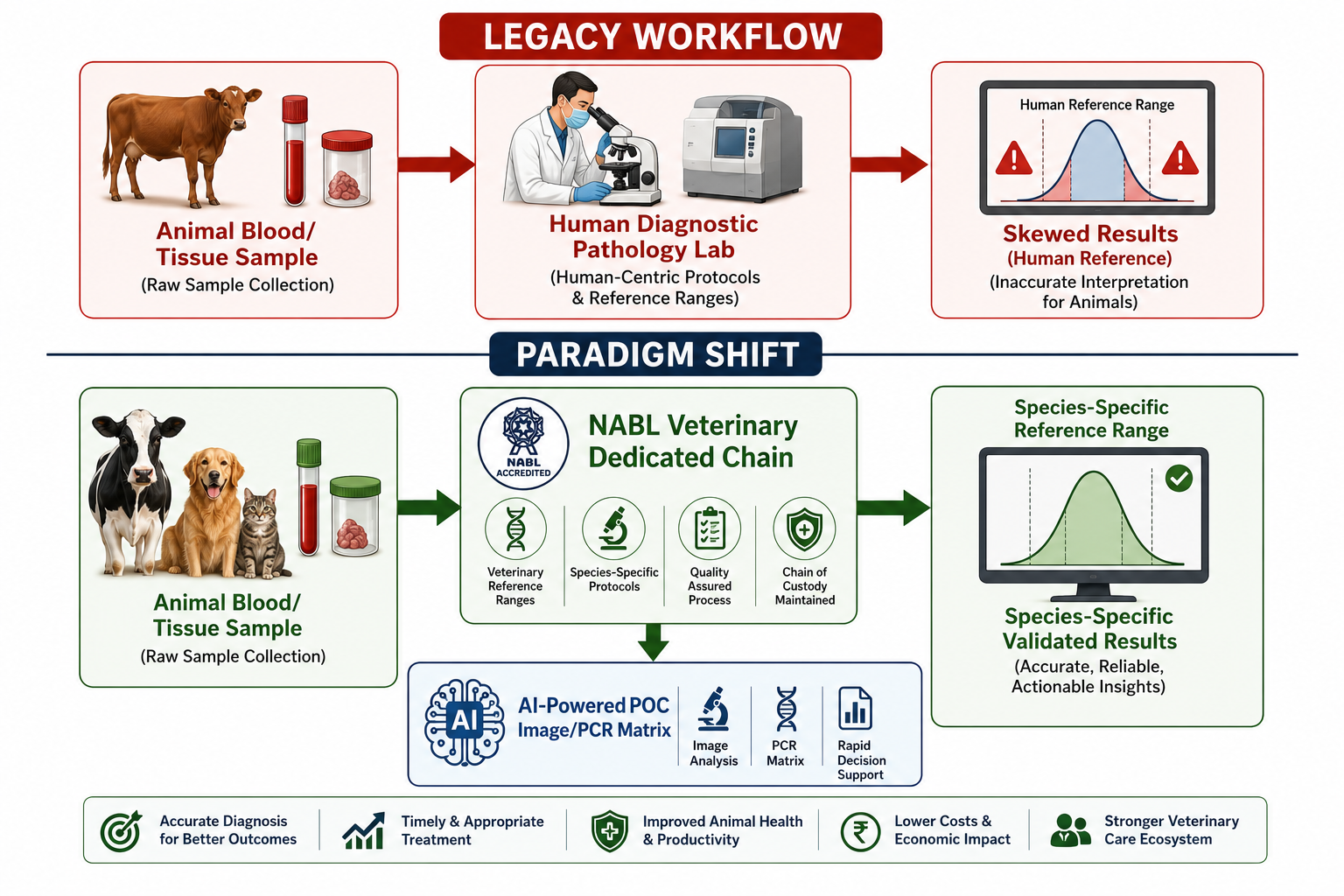
Historically, over 70% of veterinary pathology samples in India were processed by human diagnostic chains using human blood and tissue reference intervals—leading to frequent misdiagnoses due to species-specific physiological variations (e.g., canine RBC vs. feline platelet dynamics).
Operating Metric |
Legacy Human Pathology Model |
Dedicated NABL Vet Lab Model (e.g., VETLAB) |
Reference Ranges |
Calibrated for Human Physiology |
Species-Specific (Canine, Feline, Bovine, Avian) |
Sample Turnaround Time (TAT) |
24 to 48 Hours |
30 Mins (POC) to 12 Hours (Central Lab) |
Quality Compliance |
ISO 15189 (Human-centric) |
NABL ISO/IEC 17025 (Biological & Vet Testing) |
Specialized Modalities |
Limited (Basic CBC / Biochemistry) |
PCR Molecular Arrays, Histopathology, AI Radiology |
Diagnostic Accuracy Rate |
~60%–70% (High false-positive rate) |
>95% (Field-validated species controls) |
1. NABL-Accredited Chains & Point-of-Care (POC) Infrastructure
The expansion of specialized, NABL-accredited diagnostic networks like VETLAB (operated by All Vet Diagnostic Solutions) marks the professionalization of the sector.
Key Infrastructure Pillars:
-
Central Hubs & Metro Satellites: Dedicated central laboratories handling complex histopathology, endocrinology, and oncological biomarker panels, linked to satellite point-of-care (POC) collection centers across Tier-1 and Tier-2 hubs.
-
Real-Time Molecular Diagnostics (PCR): Rapid adoption of multiplex qPCR kits for immediate detection of severe infectious pathogens—such as Canine Parvovirus (CPV), Canine Distemper Virus (CDV), Vector-Borne Haemoprotozoans (Babesia, Ehrlichia), and livestock diseases (Lumpy Skin Disease, Brucellosis)—compressing diagnostic timeframes from days to hours.
-
Quality & Regulatory Standards: Accreditation under NABL ISO/IEC 17025 provides legal and clinical validity for clinical trials, diagnostic reporting, security dog squad surveillance (SPG, Police, Military), and export/import compliance.
2. Artificial Intelligence Integration: The Next Frontier
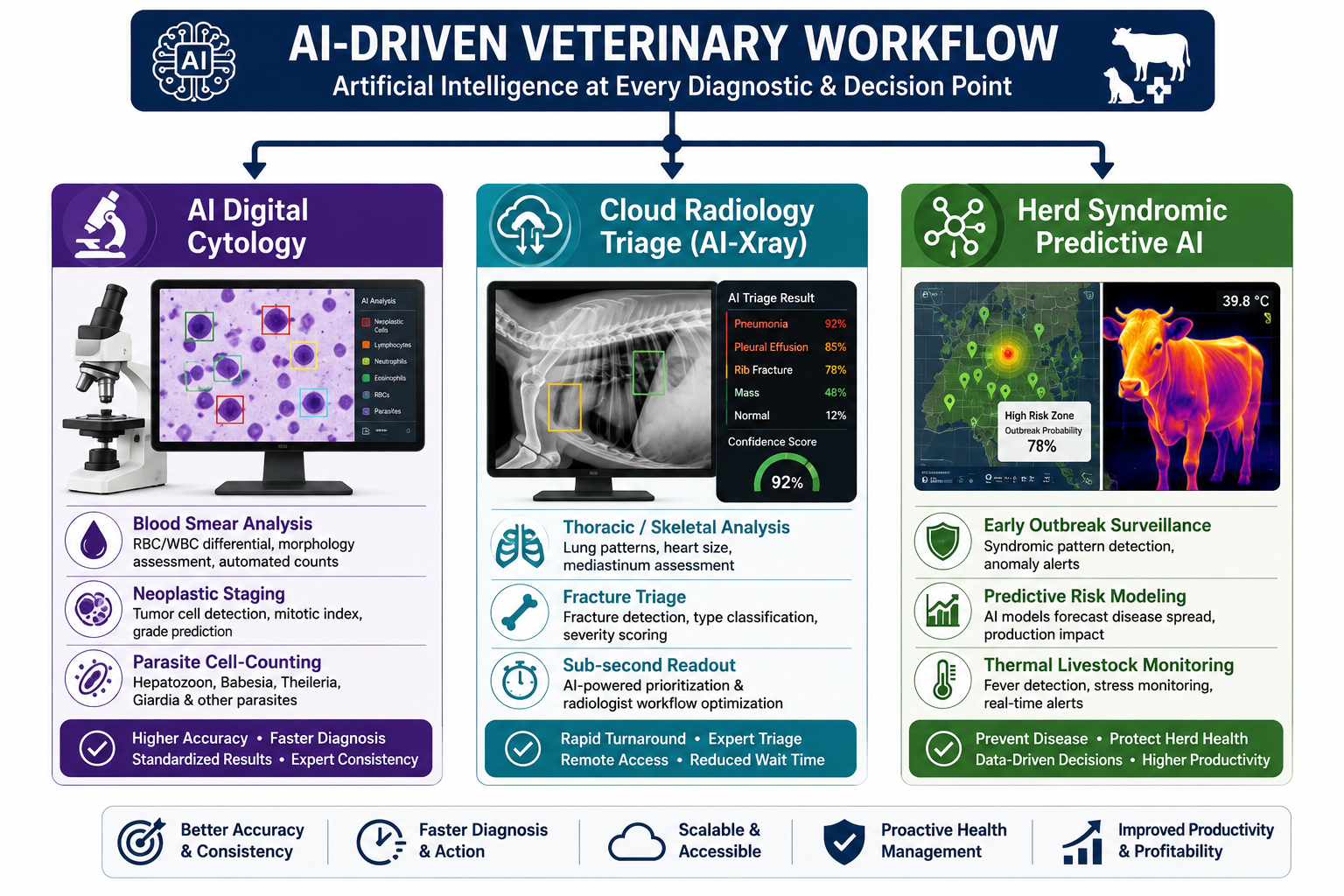
AI tools are moving from optional add-ons to standard clinical infrastructure, directly integrated into diagnostic hardware, cloud pathology platforms, and imaging devices.
-
AI Digital Cytology & Hematology: Automated slide scanners run machine-learning algorithms to detect blood parasites, count microfilariae, and flag abnormal white blood cell morphology within minutes, mitigating the shortage of veterinary pathologists.
-
AI Radiology & Tele-Imaging: AI triage software evaluates X-rays, Ultrasounds, and CT scans in real-time—instantly highlighting thoracic abnormalities, cardiac enlargement, or orthopedic fractures for immediate practitioner review.
-
Surveillance & Herd Health Analytics: In livestock and commercial poultry, AI-driven syndromic data processing enables early outbreak warnings, allowing preventive isolation before herd-wide economic loss occurs.
3. Growth Drivers & Investment Outlook
-
Pet Humanization & Insurance Adoption: Rapidly rising pet expenditure in Indian metros is shifting veterinary care from reactive treatment to proactive annual diagnostic wellness panels.
-
Payer & Hospital Consolidation: Regional veterinary chains and corporate pet hospitals are increasingly standardizing diagnostic workflows around accredited reference labs to lower malpractice risk and build trust with pet owners.
-
Government Disease Control Programs: Public sector initiatives targeting vector-borne diseases and zoonotic containment are reliant on high-throughput, NABL-certified animal diagnostic labs for nationwide screening.

