HomeLivestockProlonged Calving Labour Raises Metritis Risk in Dairy Cows: 2026 Study

Prolonged Calving Labour Raises Metritis Risk in Dairy Cows: 2026 Study

Global | Dairy | Cattle Health | Reproduction | Transition Cow

A 2026 Journal of Dairy Science study has identified a significant association between calving assistance, labour duration and postpartum metritis, highlighting the importance of timely calving intervention in dairy-herd health management. Importantly, the study was conducted by researchers from the University of British Columbia, University of Guelph and Michigan State University, rather than UC Davis.

The observational study followed 496 Holstein cows, with video monitoring available for 286 calving events. Calving assistance was required in 14% of cows. Stage-II labour averaged 57.2 minutes in unassisted cows, compared with 122.7 minutes in assisted cows.

The health consequences were particularly important for metritis. Assisted cows had 3.67-times higher odds of developing metritis than cows calving without assistance (95% CI: 1.92–7.05). Among the analysed cows, metritis prevalence was approximately 23.7%. Furthermore, every additional 10 minutes of labour was associated with 1.13-times higher odds of metritis in the relevant model.

Prolonged Calving Labour Raises Metritis Risk

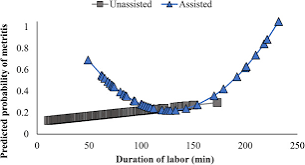
The relationship was not simply linear in assisted cows. Predicted metritis probability was 69.2% at 49 minutes and reached 100% at 232 minutes, while the lowest predicted probability—22.1%—occurred around 130 minutes. The authors therefore suggest that intervention that is either too early or too late may increase risk, although they stress that further research is required before establishing a universal intervention threshold.

The study also found that heavier calves were associated with longer labour. Every 5-kg increase in calf weight was associated with 1.47-times greater odds of retained fetal membranes. However, labour duration and assistance were not associated with retained fetal membranes or endometritis in the study.

Animal-Health Industry Implication

The findings strengthen the case for precision calving surveillance, including video monitoring, activity sensors, automated calving alerts and decision-support tools that can identify abnormal labour trajectories.

For dairy producers, reducing avoidable dystocia is potentially a health, fertility, welfare and productivity intervention, not simply a labour-management issue.

Industry Takeaway

Timely identification of abnormal calving could become an increasingly important application for precision livestock technologies, veterinary intervention and transition-cow monitoring.

Animal Health India Editorial Team
Animal Health India Editorial Teamhttps://animalhealthindia.com
Animal Health India (AHI) is an independent news and intelligence platform covering the global animal health, veterinary, livestock, poultry, companion animal and pet food sectors. Our editorial team comprises veterinary journalists, animal health professionals, regulatory affairs specialists and industry analysts with over 30 years of combined experience covering India, Asia, Europe and North America. AHI publishes news, regulatory updates, market intelligence and company news drawn from primary sources including DAHD, EMA, USDA, AVMA and leading veterinary publications worldwide.

RELATED ARTICLES