


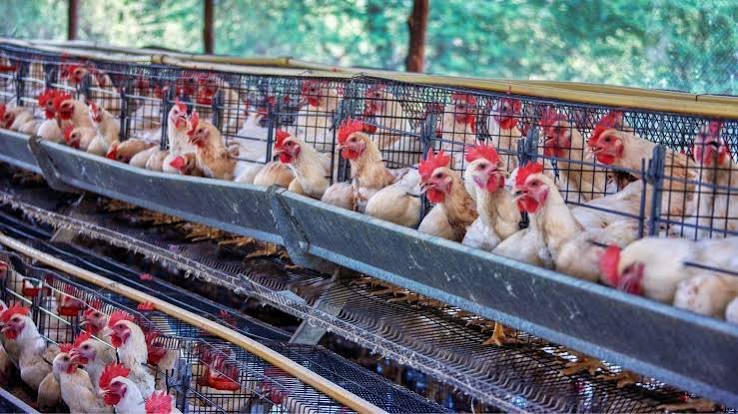
Vietnam’s meat consumption is gradually becoming more diversified, with chicken positioned for stronger growth as pork loses share of the household protein basket. The shift has implications for poultry producers, feed companies, animal-health businesses and meat processors across Southeast Asia.
Vietnam’s meat market is undergoing a gradual structural change as consumers diversify their sources of animal protein, with chicken emerging as an important growth category while pork’s share of household meat consumption declines.
The trend was highlighted by Nguyen Quoc Dat, Vice Chairman of the Vietnam Association of Livestock Production, who cited AgroMonitor data showing that pork accounted for 48% of household meat consumption. The observation was reported by Asian Agribiz on August 20, 2026.
The change does not mean that pork is disappearing from Vietnamese diets. Rather, the market is becoming more diversified, with poultry benefiting from changing consumer preferences, affordability considerations and the broader evolution of Vietnam’s animal-protein sector.
Vietnam’s Poultry Sector Is Expanding
Official Vietnamese statistics support the broader direction of the market. Vietnam’s National Statistics Office reported that poultry production continued to grow during the first half of 2026, alongside an increase in pig production. The agency said livestock production was increasingly moving toward farm-based production, biosecurity and enterprise-linked models.
In its report covering the first five months of 2026, the National Statistics Office reported that Vietnam’s poultry population increased 3.5% year on year, while the national pig population increased 2.8%. Disease conditions were described as being under control during the period.
This is important because the shift toward chicken is occurring alongside an expanding domestic poultry-production base rather than being driven exclusively by imports.
Why Chicken Is Gaining Consumer Attention
Several factors can support poultry’s expansion within Vietnam’s meat basket.
1. Price sensitivity
Vietnamese consumers remain sensitive to food prices. Euromonitor’s 2026 assessment of Vietnam’s meat market identified price sensitivity as a significant consumer consideration, with some consumers choosing less expensive meat products or reducing overall meat consumption during periods of economic pressure.
Chicken can benefit from this environment because it provides a relatively accessible source of animal protein across a wide range of consumer segments.
2. Protein diversification
The Vietnamese consumer is no longer relying as heavily on a single dominant meat category.
The movement toward poultry is part of a broader Asian pattern in which consumers increasingly diversify their protein choices as incomes, lifestyles, food preferences and product availability change.
The OECD-FAO Agricultural Outlook 2026–2035 expects poultry to account for the largest absolute increase in global meat consumption over the coming decade, with poultry consumption projected to rise by approximately 29 million tonnes, or 20%, by 2035. The report identifies Vietnam among the countries expected to contribute significantly to global meat-consumption growth.
3. Convenience and product development
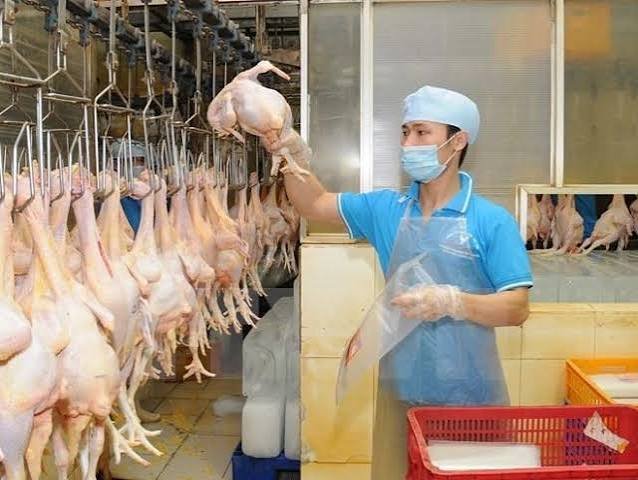
The poultry opportunity is also moving beyond whole birds and basic cuts. Vietnam’s meat industry is increasingly developing processed, branded and value-added poultry products, creating opportunities in ready-to-cook and ready-to-eat categories.
Vietnam’s Ministry of Agriculture and Environment reported in April 2026 that Vietnam and South Korea had opened their market to processed chicken meat products, including products such as heat-treated poultry foods. The agreement also established closer cooperation on veterinary inspection and quarantine.
This creates a potentially important pathway for Vietnam’s poultry industry to move from domestic commodity production toward higher-value processing and export.
Pork Remains Dominant — But Its Market Share Is Changing
Despite the shift toward poultry, pork remains the most important meat in Vietnam. Vietnam’s Ministry of Industry and Trade reported that average pork consumption was approximately 39 kg per person per year, representing about 63.68% of national livestock-product consumption in its 2025 domestic-market assessment. Pork therefore remains deeply embedded in Vietnam’s food system.
The newer household-consumption figure cited by Dr Dat should therefore be interpreted carefully.
A 48% household share is not directly comparable with the Ministry of Industry and Trade’s 63.68% figure, because the two statistics use different definitions and measurement frameworks.
This distinction is important for accurate reporting. The available evidence supports a relative diversification of Vietnam’s meat basket, but it does not support the claim that pork has ceased to be the country’s dominant meat category.
Vietnam’s Meat Market Faces a Supply-Side Challenge
The poultry opportunity comes at a complicated time for producers. Vietnam has experienced strong growth in domestic poultry production while imports have also remained significant.
Vietnam imported approximately 494,300 tonnes of meat and meat products worth about US$1.46 billion during the first half of 2026, according to preliminary customs data reported by VietnamNet. Chicken accounted for an estimated 185,000–195,000 tonnes of those imports.
At the same time, abundant domestic supply and relatively weak demand have placed pressure on prices for some locally produced poultry.
This creates a critical distinction: Growing chicken consumption does not automatically mean higher poultry-farm profitability.
Producers can face increasing demand while simultaneously experiencing margin pressure from feed costs, oversupply, imported meat and volatile farm-gate prices.
Feed Costs Will Remain a Major Risk
For poultry producers, the economics of expansion ultimately depend heavily on feed. Feed represents one of the largest variable costs in commercial poultry production. Changes in maize, soybean meal, energy, logistics and other feed inputs can rapidly affect broiler margins.
Vietnam’s poultry industry is therefore likely to remain highly sensitive to international commodity markets.
This is particularly relevant in 2026 because global agricultural markets remain volatile. The OECD-FAO Agricultural Outlook notes that poultry and pig-meat markets have experienced periods of higher supply and declining prices, while global meat consumption continues to expand.
For Vietnamese producers, the winning model may therefore not simply be “produce more chicken.”
It may increasingly be: Better genetics + feed efficiency + biosecurity + disease prevention + processing + branding + distribution
Animal Health Becomes More Important as Poultry Density Increases
The expansion of commercial poultry production also increases the importance of biosecurity and disease prevention.
Vietnam’s National Statistics Office specifically noted the expansion of livestock production toward biosecure farming systems and enterprise-linked production during the first half of 2026.
For poultry companies, disease prevention has a direct economic dimension. A disease event can affect:
-
mortality;
-
feed conversion;
-
growth rates;
-
egg production;
-
vaccination costs;
-
medication costs;
-
flock replacement;
-
processing volumes;
-
export eligibility;
-
consumer confidence.
The increasing scale of poultry production therefore creates opportunities for companies supplying vaccines, diagnostics, biosecurity products, farm-management technologies, feed additives and veterinary services.
Avian Influenza Remains a Strategic Risk
Vietnam’s poultry expansion also coincides with continued attention to avian influenza surveillance and vaccination. Asian Agribiz reported earlier in August that Vietnam was pushing for stronger avian influenza vaccination and surveillance amid active outbreaks and low vaccine coverage in some areas.
This matters because a growing poultry sector requires strong disease-control infrastructure. For investors and animal-health companies, Vietnam’s poultry market should therefore be viewed through two lenses:
Consumer opportunity
and
disease-management risk.
Both are expanding simultaneously.
From Commodity Chicken to Value-Added Poultry
The longer-term opportunity may lie in moving Vietnam’s poultry industry further up the value chain. Asian Agribiz previously reported that Vietnamese poultry producers were responding to difficult market conditions by limiting flock expansion, developing processed poultry and egg products and exploring export opportunities.
That strategy could become increasingly important as consumer preferences evolve. Instead of competing exclusively on live-bird or commodity-meat prices, producers can potentially differentiate through:
Freshness – Shorter supply chains and controlled cold-chain distribution.
Food safety – Traceability, biosecurity and certified production.
Convenience – Ready-to-cook and ready-to-eat poultry products.
Nutrition – High-protein and portion-controlled products.
Branding – Premium, traceable and differentiated poultry.
Export – Processed products capable of meeting international food-safety requirements.
What This Means for Vietnam’s Animal-Health Industry
The changing meat basket has implications well beyond poultry producers. As chicken consumption grows, demand can increase across the entire poultry value chain:
Consumers → processors → integrators → farms → hatcheries → genetics → feed → veterinary medicines → vaccines → diagnostics → biosecurity
This makes Vietnam an increasingly interesting market for international animal-health and nutrition companies.
The opportunity is particularly strong in areas that improve feed conversion, flock uniformity, disease prevention, gut health, antimicrobial stewardship, vaccination effectiveness and processing yields.
At the same time, companies need to account for the pressure created by low-cost imports and periodic domestic oversupply.
Vietnam Could Become an Increasingly Important Asian Poultry Market
The broader Asian protein market is changing rapidly. The OECD-FAO outlook expects much of the growth in global meat consumption through 2035 to come from middle-income countries. Vietnam is specifically identified among the countries outside China and India expected to record some of the largest absolute increases in meat consumption.
Vietnam’s combination of:
-
a large consumer base;
-
expanding poultry production;
-
increasing commercial farming;
-
growing food-processing capacity;
-
improving biosecurity;
-
developing export relationships;
-
and changing protein preferences
creates a favourable long-term environment for poultry.
But the opportunity is not without risks.
Feed inflation, disease outbreaks, imported meat, oversupply and farm-level profitability will continue to determine how much of the projected consumer growth translates into sustainable producer returns.
The Bottom Line
Vietnam’s meat market is diversifying rather than simply replacing pork with chicken.
Pork remains the country’s dominant animal protein, but the evidence increasingly points toward a larger role for poultry as consumers seek greater choice and producers expand commercial poultry capacity.
The most important opportunity may therefore not be chicken volume alone. It is the development of a more sophisticated poultry ecosystem spanning genetics, feed efficiency, animal health, biosecurity, processing, traceability and branded products.
For animal-health companies, feed manufacturers, poultry integrators and investors, Vietnam’s changing protein basket deserves close monitoring.
The next phase of growth is likely to be determined not only by how much chicken Vietnamese consumers eat, but by who can produce it efficiently, safely and competitively while maintaining animal health and meeting increasingly demanding food-safety and export requirements.
Key Market Facts
Indicator |
Latest available evidence |
|---|---|
Pork share cited by Dr Nguyen Quoc Dat |
48% of household meat consumption |
Vietnam pig population growth, Jan–May 2026 |
+2.8% YoY |
Vietnam poultry population growth, Jan–May 2026 |
+3.5% YoY |
Estimated meat imports, H1 2026 |
494,300 tonnes |
Value of meat imports, H1 2026 |
~US$1.46 billion |
Estimated chicken imports, H1 2026 |
185,000–195,000 tonnes |
Vietnam average pork consumption cited by Ministry of Industry & Trade |
~39 kg/person/year |
Pork share of national livestock-product consumption in 2025 framework |
63.68% |
Projected global poultry-consumption increase to 2035 |
~29 million tonnes / +20% |

