



Tyson Foods has cut its fiscal-2026 adjusted operating-income forecast for the second time in a month, highlighting the severity of the U.S. cattle-supply squeeze and the continuing pressure on beef-processing margins.
Tyson now expects $1.85–$2.05 billion in fiscal-2026 adjusted operating income, down from its August forecast of $2.1–$2.3 billion. The company also reduced its expected fiscal-2026 revenue growth to 1.5%–2.0%, from 2.5%–3.5% previously.
Cattle scarcity is overwhelming high beef prices
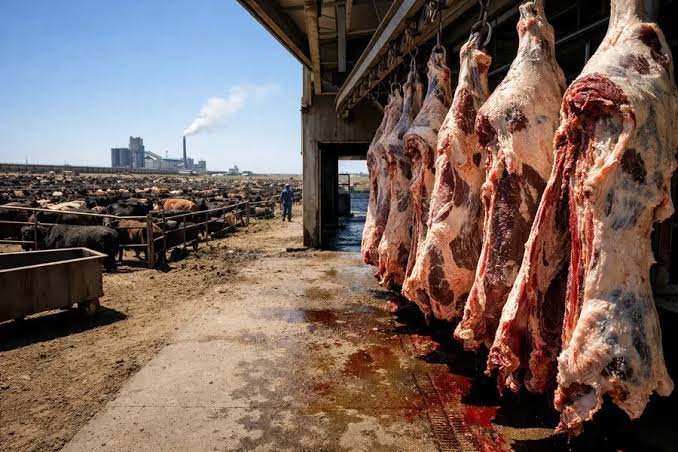
The central problem is not weak beef prices. Retail beef prices have risen sharply, but processors are paying exceptionally high prices for increasingly scarce cattle.
The average U.S. price of lean and extra-lean ground beef reached $8.41/lb in July, more than 38% above five years earlier, according to government data cited by Reuters. Yet higher retail prices have not been sufficient to offset cattle procurement costs and margin compression.
The supply squeeze has been intensified by drought-related herd reductions and disruptions to Mexican cattle imports linked to concerns over New World screwworm. Tyson has already closed or reduced operations at several beef facilities as it attempts to align processing capacity with available cattle.
What this means for animal health
The strategic consequence is significant for the cattle-health industry.
When herd expansion is constrained, the economic value of productivity per animal rises. The priority shifts from simply increasing cattle numbers to extracting more productive output from existing animals. This strengthens the business case for:
-
Preventive disease control and reduced morbidity
-
Reproductive efficiency and fertility management
-
Calf survival and early-life health
-
Feed efficiency and nutritional management
-
Vaccination and biosecurity
-
Precision livestock monitoring and early disease detection
-
Data-driven herd and individual-animal management
The opportunity is therefore increasingly defined as: More output per animal — not simply more animals.
Industry signal
Tyson’s latest guidance cut is more than a meat-industry earnings story. It is a signal that animal productivity is becoming a strategic economic variable as the U.S. cattle herd remains historically tight.
For animal-health companies, that creates a stronger value proposition around technologies and interventions that can demonstrate measurable gains in fertility, survival, growth, feed conversion, disease prevention and lifetime productivity.
Bottom line: A structurally smaller cattle supply increases the economic value of every productive animal. That should increasingly favor preventive health, reproductive technologies, precision livestock systems and productivity-enhancing interventions across the U.S. beef value chain.

