


Global | Veterinary Biotechnology | Companion Animals | Monoclonal & Bispecific Antibodies | Investment | M&A
October 2026
The veterinary pharmaceutical industry is entering a more sophisticated phase of biologics development. What began with a small number of highly targeted monoclonal antibodies for canine dermatology and osteoarthritis is now expanding into infectious disease, oncology, chronic kidney disease, cardiology and potentially multi-target immune therapies.
The latest signal came on 4 October 2026, when US-anchored biologics CDMO Bora Biologics and Taiwan-based Protect Animal Health announced a long-term, multi-project collaboration covering at least three veterinary antibody programmes — two monoclonal antibodies and one bispecific antibody. The agreement spans cell-line development, process development, analytical development, scale-up and manufacturing, and represents Bora’s first animal-health product collaboration.
On its own, the transaction is still an early-stage development partnership. The targets, clinical indications, development stages and commercial potential of Protect’s programmes have not been publicly disclosed in detail. It would therefore be premature to value the pipeline as though these were late-stage assets.
But the strategic direction is significant.
The industry is moving from “one molecule, one indication” toward a model in which antibody discovery, species engineering, manufacturing, regulatory knowledge and clinical-development infrastructure can potentially be reused across multiple veterinary products.
That is the beginning of platform economics in veterinary biotechnology and a potential wave of New Competitors’ out to challenge incumbents such as Zoetis, Elanco and maybe MSD Animal Health.
From Individual Products to Platforms
Traditional veterinary pharmaceutical development has largely been organised around individual products:
Disease → target → molecule → clinical programme → approval → commercialisation
A platform-based biologics company seeks to build something broader:
Target-discovery capability → species-specific antibody engineering → reusable cell-line/process technology → regulatory know-how → manufacturing infrastructure → multiple products
If a company spends heavily to develop one antibody and that antibody becomes a successful product, the investment is largely tied to one commercial asset.
If the same organisation can use its discovery, engineering and manufacturing infrastructure to develop five or ten antibodies, the value of the underlying technology platform can become considerably greater than the value of any single product.
That is why the Protect–Bora agreement is interesting.
Bora says its CHO-K1 cell-line platform is designed to support monoclonal antibodies and multispecific proteins, while its integrated capabilities cover cell-line development, process development, analytical development, scale-up and manufacturing. Protect gains access to this infrastructure across several programmes rather than commissioning a single isolated manufacturing project.
This is precisely the type of relationship that can allow a small veterinary biotech to operate with capabilities that would otherwise require substantial internal capital expenditure.
Market Is Already Being Validated by Commercial Products
The platform thesis would be considerably weaker if veterinary antibodies remained a laboratory experiment. They no longer are.
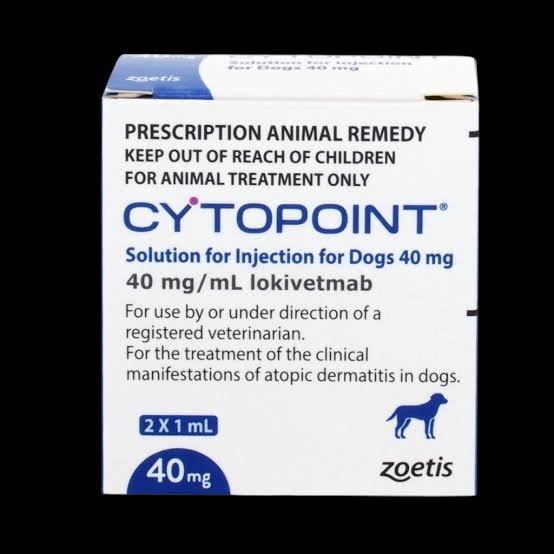
The first important commercial validation came from Zoetis, which established the veterinary monoclonal-antibody category with Cytopoint for canine allergic and atopic dermatitis.
Cytopoint, based on lokivetmab, targets canine interleukin-31 (IL-31), an important mediator of itch. The USDA licensed it in the US in 2016, while the European Commission subsequently authorised it in the EU. It was the first veterinary monoclonal antibody authorised in the European Union.
The next major step was osteoarthritis.
In 2022, FDA approved Solensia (frunevetmab) for cats, the first monoclonal antibody approved by FDA for any animal species. In 2023, FDA approved Librela (bedinvetmab) for dogs, the first FDA-approved monoclonal antibody for dogs. Both target nerve growth factor (NGF) to control osteoarthritis pain.
This is an important proof point. The industry has demonstrated that antibodies can be:
-
engineered for dogs or cats;
-
administered in veterinary practice;
-
dosed at relatively long intervals;
-
commercialised as chronic-care products;
-
accepted by veterinarians and pet owners;
-
integrated into routine veterinary visits.
That changes the investment case for the next generation of veterinary biologics.

Category Is Now Moving Beyond Dermatology and Osteoarthritis
The first generation of commercial veterinary mAbs concentrated heavily on dermatology and pain. That was logical.
Both markets contain large populations of chronic patients, have clearly identifiable biological targets and benefit from therapies that can reduce dosing frequency. But the pipeline is now becoming much broader. Selected examples
Company / programme |
Technology |
Species |
Target / area |
Development status / significance |
|---|---|---|---|---|
Zoetis – Cytopoint |
mAb |
Dogs |
IL-31 |
Commercial |
Zoetis – Librela |
mAb |
Dogs |
NGF |
Commercial |
Zoetis – Solensia |
mAb |
Cats |
NGF |
Commercial |
Elanco – Befrena |
mAb |
Dogs |
IL-31 |
US launch in 2026 |
Elanco – Trutect |
mAb |
Dogs |
Canine parvovirus |
Full USDA approval |
Merck – Gilvetmab |
mAb |
Dogs |
PD-1 |
Conditional USDA licence |
Protect Animal Health/Bora |
mAbs + bispecific |
Veterinary |
Undisclosed |
Multiple programmes |
Akston Animal Health |
mAb + in-vivo antibody platform |
Dogs/cats |
PD-L1 and other targets |
Development |
Zoetis pipeline |
mAbs |
Dogs/cats |
Renal, oncology, cardiology |
Multiple programmes |
China academic/industry programmes |
mAbs |
Dogs/cats |
CPV, PD-1 and infectious disease |
Preclinical/development |
This is no longer a single-product phenomenon.
Elanco Demonstrates the Importance of the Manufacturing Platform
One of the clearest demonstrations of platform economics is coming from Elanco. The company launched Befrena (tirnovetmab) in 2026 as an anti-IL-31 monoclonal antibody for canine allergic and atopic dermatitis.
Elanco describes Befrena as lasting approximately 6–8 weeks, compared with approximately 4–8 weeks for the incumbent lokivetmab, and reported that phased commercial deployment was already underway in US veterinary practices.
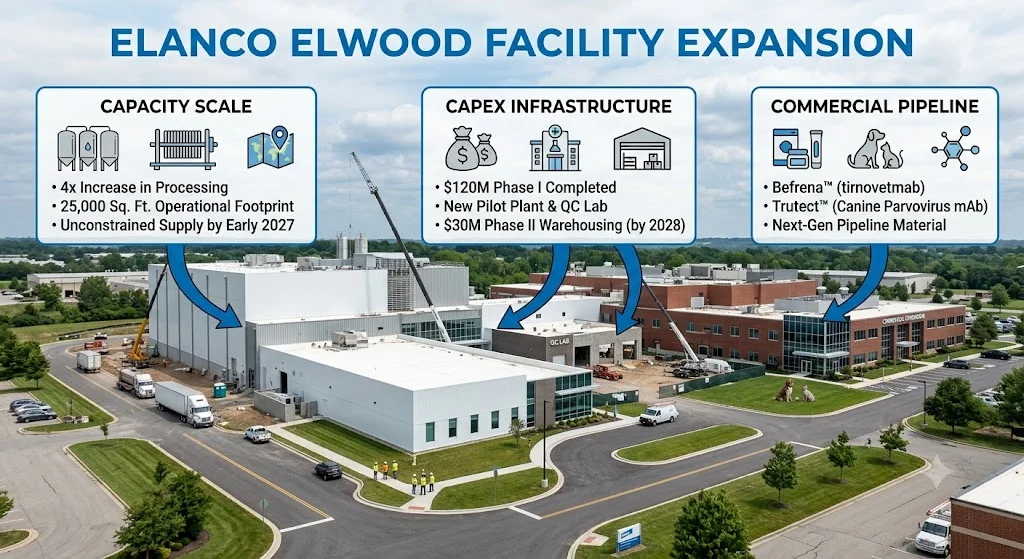
But the more interesting development may be the infrastructure behind the product. In August 2026, Elanco completed a 25,000-square-foot expansion of its Elwood, Kansas manufacturing facility specifically strengthening monoclonal-antibody production.
The company invested US$120 million in the current expansion and plans another US$30 million through 2028, bringing the total planned investment to US$150 million.
The expansion increases production capacity by more than four times through additional upstream and downstream processing equipment and adds a pilot plant and quality-control laboratory. That is a major signal.
The bottleneck in veterinary biologics is not necessarily discovering an antibody. It is being able to manufacture it reliably, consistently, economically and at commercial scale.
Elanco has explicitly linked the investment to its expanding mAb portfolio. Both Befrena and its canine-parvovirus antibody Trutect are manufactured at Elwood. The company also said demand for Befrena was running at twice expectations, with unconstrained supply expected in early 2027.
The lesson for smaller biotech companies is clear: A promising antibody without scalable manufacturing is not yet a commercial platform.
Elanco Has Already Built a Second Veterinary mAb: Trutect
Elanco’s second example is even more interesting because it demonstrates that the same broad technology class can address an entirely different disease.
Trutect, formerly known as canine parvovirus monoclonal antibody, targets canine parvovirus rather than an inflammatory cytokine.

The product received conditional USDA approval in 2023 and full approval in December 2025. Elanco reports that real-world use showed 93% survival among treated puppies, while treated parvovirus patients spent an average of 1.87 fewer days in hospital. The commercial proposition is fundamentally different from dermatology.
Cytopoint/Befrena: chronic inflammatory disease → cytokine blockade → recurring treatment
Trutect: infectious disease → pathogen-specific antibody → targeted intervention/passive immunity
The significance is that antibody technology is proving adaptable to different therapeutic mechanisms.
Zoetis Is Taking the Platform Thesis Even Further
Zoetis’ pipeline illustrates perhaps the clearest example of how mAbs are being expanded across therapeutic areas. In its 2025 innovation presentation, Zoetis described a pipeline that includes:
-
long-acting osteoarthritis mAbs;
-
renal mAb therapies;
-
dermatology mAbs;
-
oncology mAbs;
-
cardiology solutions;
-
diagnostics and biomarkers.
The company disclosed seven assets and diagnostic biomarkers under development around chronic kidney disease and four assets and diagnostic biomarkers in oncology. It also described nine assets and diagnostic biomarkers associated with cardiology.
The company’s projected approval roadmap included:
-
renal mAb therapy in 2026;
-
dermatology mAb and oncology mAbs in 2028–2029;
-
additional long-acting and therapeutic products across the pipeline.
These are company projections rather than guaranteed approvals and remain subject to clinical and regulatory outcomes.
The strategic point is nevertheless powerful: one scientific modality → multiple targets → multiple diseases → multiple species → multiple commercial markets.
Commercial Opportunity – Veterinary Oncology
Veterinary oncology is particularly interesting because cancer is common in ageing companion animals and many therapeutic options remain limited.
Zoetis estimates that approximately one in four dogs and one in five cats will develop cancer during their lifetime, according to its 2025 innovation presentation. The company identifies oncology as the leading cause of death in dogs and the second leading cause in cats. The company is developing oncology mAbs designed to:
-
prime the immune system;
-
target tumour cells;
-
reduce tumour invasion/metastasis;
-
address secondary consequences such as bone and appetite effects.
Zoetis estimates an overall oncology addressable market of US$1.2–1.7 billion within animal health. These are internal market estimates rather than independently validated market sizes, but they demonstrate where a major animal-health company sees potential.
Gilvetmab Shows Veterinary Checkpoint Inhibition Is Moving Into the Clinic
One of the strongest current examples is gilvetmab, a caninized anti-PD-1 monoclonal antibody developed by Merck Animal Health. The biological principle is borrowed from human oncology.

Tumours can exploit PD-1/PD-L1 signalling to suppress T-cell activity. Blocking PD-1 can therefore release part of that immune suppression and enable the immune system to attack tumour cells.
The veterinary evidence is now becoming much more substantial. A 2026 Journal of Veterinary Internal Medicine study evaluated 51 dogs with melanoma or mast-cell tumours, plus 15 dogs with lymphoma. For melanoma, the objective response rate was 20%, with median time to progression of 56 days.
For mast-cell tumours, the objective response rate was 46%, while median time to progression had not been reached at the analysis. No objective responses were observed in the lymphoma cohort.
Serious adverse events including anaphylaxis, hypotension or tumour haemorrhage occurred in 3 of 51 dogs (5.9%). The results were sufficient to support conditional USDA licensure for melanoma and mast-cell tumours, but not lymphoma.
Merck highlighted the data in October 2026 following publication of peer-reviewed studies in the Journal of Veterinary Internal Medicine and Journal of the American Veterinary Medical Association. This is important for the industry because it demonstrates that veterinary biologics are beginning to address mechanism-driven oncology, not simply symptom control.
China Is Developing Its Own Veterinary Antibody Science
The platform shift is not confined to US and European companies. China is developing significant veterinary antibody research capabilities.
Researchers associated with Huazhong Agricultural University published a 2026 study describing computation-driven discovery of a canine monoclonal antibody against canine parvovirus. The researchers used single-B-cell technology and computational approaches to identify antibody E9, reporting broad neutralising activity and therapeutic effects in vivo.
Other Chinese researchers have been developing canine PD-1 antibodies for cancer applications. A 2026 Veterinary Immunology and Immunopathology publication involved scientists from Guangdong Haid Group, South China Agricultural University and related institutions and investigated therapeutic PD-1 monoclonal antibodies for canine tumours.
Chinese researchers have also reported development of a chimeric antibody capable of targeting both feline and canine parvoviruses. This suggests that Asia is not simply a future manufacturing base for veterinary biologics.
It is developing antibody discovery and engineering capability of its own.
Next Frontier: Bispecific Antibodies
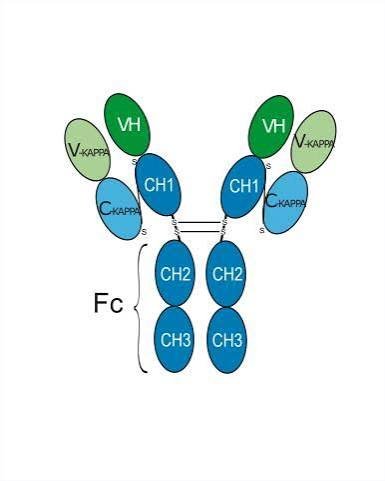
Monoclonal antibodies generally bind to one defined target.
Bispecific antibodies are designed to engage two biological targets or two cell types simultaneously. Human oncology has already demonstrated the commercial potential of bispecific technology.
Veterinary medicine is much earlier. A 2026 patent publication discussing bispecific binding agents for companion animals notes that there are currently no approved bispecific antibodies for companion animals, while also highlighting challenges around yield, homogeneity and stability.
That makes the Protect Animal Health–Bora collaboration particularly interesting.
The companies are not only developing two monoclonal-antibody programmes; they are also advancing one bispecific programme. It remains far too early to predict commercial success. But strategically, it shows where the technology curve is heading.
Another Platform Model: Make the Animal Produce the Antibody
An even more unconventional approach is being developed by Akston Animal Health.
Rather than manufacturing large quantities of conventional antibody and repeatedly injecting the animal, its Ambifect platform is designed to stimulate the animal’s own cells to produce therapeutic antibodies.
The company’s lead programme, AKS-701d, targets PD-L1 for canine urothelial carcinoma.
According to company disclosures, the programme has been produced at one-third commercial scale in a 200-litre bioreactor, while a high-yield CHO-cell development programme is being pursued with potential scalability to 5,000 litres.
Akston also describes additional Ambifect candidates targeting PD-L1, creating the possibility of a platform rather than a single cancer product. This is an important strategic distinction:
Conventional mAb model: Manufacture antibody → inject → repeat
In-vivo antibody-production model: Inject platform technology → animal produces antibody → potentially longer duration
If successfully validated, the latter could address one of the biggest economic limitations of conventional mAbs: manufacturing cost and frequent administration. It is still an emerging technology and should not be regarded as clinically established.
Veterinary mAbs Are a Meaningful Market, But Estimates Vary Widely
Independent market-research firms increasingly identify veterinary monoclonal antibodies as a high-growth segment.
MarketsandMarkets estimates the global veterinary monoclonal-antibody market at approximately US$1.70 billion in 2025, increasing to US$3.06 billion by 2030, representing a projected CAGR of 12.4%.
Grand View Research estimates a similar 2026 market starting point but a faster growth trajectory, putting the market at approximately US$1.7 billion in 2026 and US$3.3 billion by 2030, equivalent to around 19.1% CAGR.
A September 2026 estimate from Fortune Business Insights is more aggressive, placing the market at approximately US$1.66 billion in 2026 and US$6.83 billion by 2034, representing approximately 19.38% CAGR.
It is that double-digit growth expectations are becoming common across multiple independent market studies.
Why Companion Animals Are Leading the Adoption
The economics of companion-animal medicine are particularly favourable for biologics. Several structural trends reinforce each other:
1. Longer pet lifespans – As dogs and cats live longer, chronic diseases such as osteoarthritis, cancer, renal disease and cardiovascular disease become more important.
2. Humanisation of pets – Owners increasingly view companion animals as family members and are willing to spend more on diagnostics and sophisticated therapies.
3. Chronic disease economics – A one-time cure is not necessary for a commercially successful veterinary biologic. A chronic condition treated repeatedly can produce recurring revenue.
4. Veterinary administration – An injectable product can create a recurring veterinary-clinic interaction rather than relying entirely on owner compliance with daily oral medication.
5. Targeted mechanism – Owners and veterinarians may accept premium pricing when the biological target and clinical benefit are clearly demonstrated.
The commercial success of Cytopoint, Librela, Solensia and the emerging Elanco portfolio demonstrates that the model can work.
Zoetis’ 2025 results showed that its international companion-animal revenue growth was driven partly by Librela, Solensia and dermatology products, although US mAb sales for OA pain declined during the year. The market is attractive, but individual products can still face competitive, safety and commercial pressures.
Safety Is the Major Counterweight
Biologics are not automatically safer simply because they are highly targeted. The experience with Librela demonstrates why.
FDA has reviewed post-market adverse-event reports involving Librela, including neurologic signs, urinary incontinence, polyuria and polydipsia; some reports involved death or euthanasia. FDA subsequently updated the product’s US labelling and added client information requirements. This does not mean the entire monoclonal-antibody category is unsafe.
It means the category requires long-term pharmacovigilance and disciplined communication of risks. This becomes particularly important when a platform company has several related products.
A safety signal involving one antibody may not automatically apply to another antibody, but regulators and veterinarians will scrutinise target biology, species specificity, immune effects, manufacturing quality and clinical evidence closely.
Regulation Is Catching Up With the Science
A particularly important development arrived in September 2026.
FDA’s Center for Veterinary Medicine issued draft GFI #298 / VICH GL62, specifically addressing target-animal safety evaluation for veterinary monoclonal antibody products. The draft guidance is intended to harmonise approaches to safety studies for veterinary monoclonal antibodies under laboratory and field conditions.
FDA says the harmonised standard is expected to facilitate development and commercialization of novel veterinary monoclonal antibodies. Comments are due 17 November 2026. This is strategically important.
A mature industry needs more than scientific capability. It needs:
standardised development pathways → predictable safety requirements → manufacturing standards → clinical evidence → regulatory clarity
The FDA/VICH development therefore represents infrastructure for the next stage of the veterinary biologics market.
Regulatory Landscape Is Not Uniform
One important distinction is frequently missed in discussions about veterinary biologics. In the United States, regulatory responsibility depends on the product.
FDA’s Center for Veterinary Medicine regulates animal drugs such as Librela and Solensia.
USDA’s Center for Veterinary Biologics regulates many veterinary biological products, including products such as Cytopoint, Trutect, Befrena and gilvetmab.
USDA maintains a current catalogue of licensed veterinary biological products and distinguishes establishment, permittee and product licensing.
This matters for biotech investors. A platform must be designed not only around biological science but also around the regulatory architecture of each product and jurisdiction.
Manufacturing May Become the Real Competitive Moat
Antibody discovery is becoming more accessible. Commercial-scale biologics manufacturing remains difficult. A platform company needs:
-
appropriate host-cell systems;
-
stable cell lines;
-
high titres;
-
efficient upstream processing;
-
purification;
-
analytical methods;
-
viral safety controls;
-
batch consistency;
-
cold-chain logistics;
-
validated manufacturing processes;
-
regulatory-quality documentation.
Bora’s Protect collaboration is therefore strategically significant because it explicitly covers the journey from cell-line development to scale-up and manufacturing, rather than merely providing a laboratory antibody-discovery service.
Elanco’s US$150 million investment makes the same point from another angle. The large companies are spending substantial capital to secure manufacturing capacity before the next wave of products reaches the market.
This creates a potentially attractive role for specialist animal-health CDMOs. The future ecosystem could look like:
Academic research → biotech discovery → antibody engineering → veterinary clinical development → specialist CDMO → regulatory approval → animal-health major → veterinary channel
That is very different from the traditional vertically integrated animal-pharmaceutical model.
Business Model Could Resemble Human Biopharma More Closely
The emerging veterinary-biologics ecosystem is beginning to resemble the human-biopharmaceutical value chain.
Discovery companies – Develop novel targets, antibodies or antibody platforms.
Veterinary biotech – Owns the biological asset and clinical-development programme.
CDMO – Provides cell-line, process-development and manufacturing capabilities.
Large animal-health company – Provides regulatory, commercial, distribution and global-market access.
Veterinary clinic – Becomes both the treatment point and recurring commercial channel.
Pet owner – Becomes the ultimate healthcare decision-maker and payer.
This creates multiple possible exit routes for startups:
Licensing → co-development → regional partnership → acquisition → commercialisation
That is why large animal-health companies may increasingly view veterinary biotech companies not simply as competitors, but as external innovation engines.
Why M&A Could Accelerate
Large animal-health companies face an unavoidable pipeline challenge. They need continuous innovation, but building every new technology internally is slow and expensive.
Zoetis explicitly describes a development model combining internal R&D with strategic alliances, academic collaborations and early-stage investments.
Elanco similarly describes monoclonal-antibody discovery and immunotherapeutics as technology platforms supporting its next wave of innovation. Its 2025 investor strategy identified 10+ major innovation projects and projected multiple significant approvals over 2026–2031.
The implication is straightforward:
A startup with: validated target + species-specific antibody + early clinical evidence + scalable manufacturing + regulatory pathway
could become significantly more valuable to a large animal-health company than a startup with only a laboratory discovery.
What Happens Beyond Companion Animals?
The immediate commercial market is heavily companion-animal focused. But the platform concept could eventually extend to livestock. The economics are harder.
A biologic costing hundreds of dollars per animal may be feasible for a companion dog but difficult to justify in a commercial poultry flock or commodity pig.
Nevertheless, there are livestock situations where targeted biologics could make economic sense:
-
high-value breeding animals;
-
neonatal disease;
-
severe infectious outbreaks;
-
replacement stock;
-
dairy cattle with high lifetime production value;
-
disease-control programmes where vaccination is ineffective or unavailable.
The economics will therefore depend heavily on cost per animal versus value protected. This is one reason companion animals are likely to remain the first major commercial engine.
India: An Emerging Opportunity, but Cost Will Be Critical
India is still at a much earlier stage in veterinary biologics than the US. However, several structural factors could eventually support an Indian veterinary-biologics ecosystem:
-
expanding companion-animal population;
-
increasing veterinary-specialty care;
-
growing pet-health expenditure;
-
strong pharmaceutical manufacturing capabilities;
-
expanding biologics and biosimilar expertise;
-
large veterinary academic institutions;
-
growing contract manufacturing capabilities.
The challenge is price. A US-style premium biologic cannot simply be transplanted into the Indian market. The Indian opportunity is more likely to emerge through:
lower-cost manufacturing + local clinical development + regional licensing + biosimilar/biobetter capability + carefully selected high-value indications.
India’s veterinary biotechnology ecosystem is also becoming more visible academically. ICAR-NIVEDI hosted the 2026 VIBCON conference in Bengaluru in September, bringing together researchers, policymakers and industry around veterinary immunology, biotechnology and disease intelligence.
The more immediate Indian opportunity may therefore lie in platform manufacturing, veterinary diagnostics and biologics development partnerships, rather than trying to reproduce the entire Zoetis model.
Bigger Strategic Picture
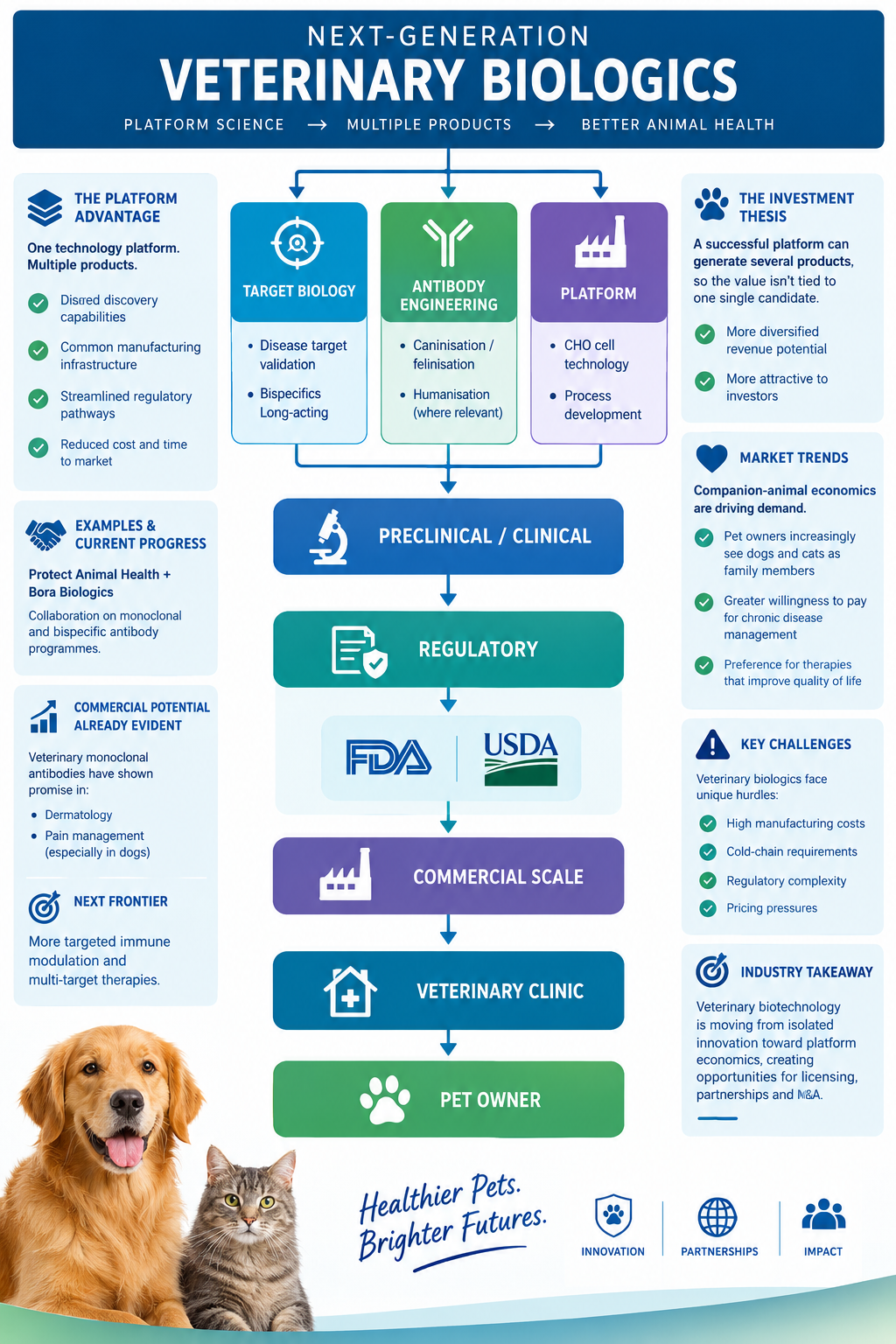
The most important change is not that veterinary medicine has discovered monoclonal antibodies. It is that the industry is learning how to build businesses around antibody platforms. The progression is becoming visible:
Generation 1
One antibody → one indication
Examples:
-
Cytopoint
-
Librela
-
Solensia
Generation 2
Multiple antibodies → multiple therapeutic areas
Examples:
-
Elanco’s dermatology and infectious-disease mAbs
-
Merck’s oncology antibody
-
Zoetis’ renal, oncology and cardiology programmes
Generation 3
Reusable antibody platform → multiple products + CDMO/manufacturing ecosystem
Examples:
-
Protect Animal Health/Bora
-
Akston’s Ambifect
-
broader platform-based veterinary biotech models
Generation 4
Multispecific / in-vivo antibody production / precision immunotherapy
This is where bispecific antibodies, immune-cell engagement, long-acting systems, antibody-drug conjugates and other advanced modalities could eventually take the industry.
A 2026 review of therapeutic monoclonal antibodies in companion animals identifies exactly this direction, highlighting not only mAbs but emerging bispecific antibodies, antibody-drug conjugates, VHHs, mRNA-based approaches and AI-assisted strategies as potential future technologies where they solve defined veterinary problems.
Industry Outlook
The veterinary-biologics industry is still small compared with human biopharmaceuticals, but its direction is increasingly clear. The commercial success of targeted antibodies has established proof of concept.
The emergence of new therapeutic areas is expanding the addressable market. CDMO partnerships are lowering the infrastructure barrier for startups. Large animal-health companies are investing directly in biologics manufacturing.
Regulators are developing more explicit veterinary-mAb guidance. Academic groups in China and elsewhere are developing species-specific antibodies. And investors increasingly have multiple potential exit routes:
licensing → co-development → strategic partnership → acquisition → independent commercialisation
The Protect Animal Health–Bora Biologics collaboration therefore matters less because it represents three undisclosed programmes and more because it demonstrates how the veterinary biologics ecosystem is being assembled around reusable platforms.
Animal Health Industry Takeaway
The next major competitive advantage in veterinary pharmaceuticals may not belong to the company with the single best molecule.
It may belong to the company that can repeatedly turn validated biology into commercially viable veterinary biologics. That requires five capabilities working together:
Target discovery + species-specific antibody engineering + scalable manufacturing + regulatory expertise + veterinary commercialisation
The early winners have already demonstrated pieces of this model.
-
Zoetis has established the commercial mAb category and is extending the technology across pain, dermatology, renal disease, oncology and cardiology.
-
Elanco is building manufacturing capacity around a growing mAb portfolio, including a US$150 million planned investment in its Kansas biologics infrastructure.
-
Merck is pushing immune-checkpoint inhibition into canine oncology, with gilvetmab supported by clinical evidence in melanoma and mast-cell tumours.
-
Protect Animal Health and Bora are now combining a veterinary pipeline with a dedicated biologics-development and manufacturing platform spanning multiple antibody formats.
-
China is building indigenous antibody-discovery capability in infectious disease and oncology.
And FDA’s new VICH-aligned veterinary-mAb safety guidance indicates that the regulatory infrastructure is beginning to mature alongside the science.
The conclusion is increasingly difficult to ignore: veterinary biologics are moving from a collection of successful products toward an identifiable technology platform — and that shift could reshape animal-health R&D, manufacturing, licensing and M&A over the next decade.
Key Data Points at a Glance
Metric / Development |
Current evidence |
|---|---|
Veterinary mAb market estimate, 2025 |
US$1.70B — MarketsandMarkets |
Veterinary mAb forecast, 2030 |
US$3.06B |
Estimated CAGR, 2025–30 |
12.4% |
Alternative 2026 market estimate |
US$1.7B — Grand View Research |
Alternative 2030 estimate |
US$3.3B |
Elanco Kansas biologics investment |
US$150M planned |
Current Elanco expansion |
US$120M |
Elanco facility expansion |
25,000 sq ft |
Elanco capacity increase |
>4× |
Protect/Bora programmes |
≥3 antibody programmes |
Protect/Bora mAbs |
2 |
Protect/Bora bispecifics |
1 |
Gilvetmab melanoma ORR |
20% |
Gilvetmab mast-cell tumour ORR |
46% |
Gilvetmab serious AEs |
5.9% (3/51) |
FDA veterinary mAb guidance |
GFI #298 / VICH GL62, September 2026 |
FDA comment deadline |
17 November 2026 |
Market estimates are from commercial research firms with different definitions and should not be directly combined. Clinical data are indication- and study-specific.
Key References;
-
Bora Biologics / Protect Animal Health — October 2026: multi-project collaboration covering two mAbs and one bispecific antibody.
-
FDA — CVM GFI #298 / VICH GL62, September 2026: draft guidance for target-animal safety evaluation of veterinary monoclonal antibodies.
-
FDA — Librela approval: first FDA-approved monoclonal antibody for dogs; Solensia was first for cats and first mAb approved for any animal by FDA.
-
FDA — Librela safety information and labelling: post-approval adverse-event evaluation and label changes.
-
Zoetis — 2025 Annual Report: companion-animal performance and mAb products.
-
Zoetis — 2025 Innovation Webcast: renal, oncology and cardiology mAb pipeline, R&D strategy and market opportunities.
-
Elanco — Befrena launch, May 2026: anti-IL-31 mAb and commercial launch.
-
Elanco — Kansas biologics expansion, August 2026: US$120M expansion, >4× capacity increase and US$150M planned total investment.
-
Elanco — Trutect: canine parvovirus monoclonal antibody and full USDA approval.
-
Merck Animal Health / JVIM — Gilvetmab, 2026: peer-reviewed canine oncology efficacy and safety data.
-
Veterinary Sciences, 2026: review of therapeutic mAbs, species adaptation, Fc biology, clinical translation and future platforms.
-
Veterinary Microbiology, 2026: computational discovery of canine parvovirus mAb.
-
Veterinary Immunology & Immunopathology, 2026: development of therapeutic PD-1 antibodies for canine tumours in China.
-
MarketsandMarkets: veterinary monoclonal-antibody market forecast.
-
Grand View Research: alternative veterinary mAb market estimates and regional segmentation

